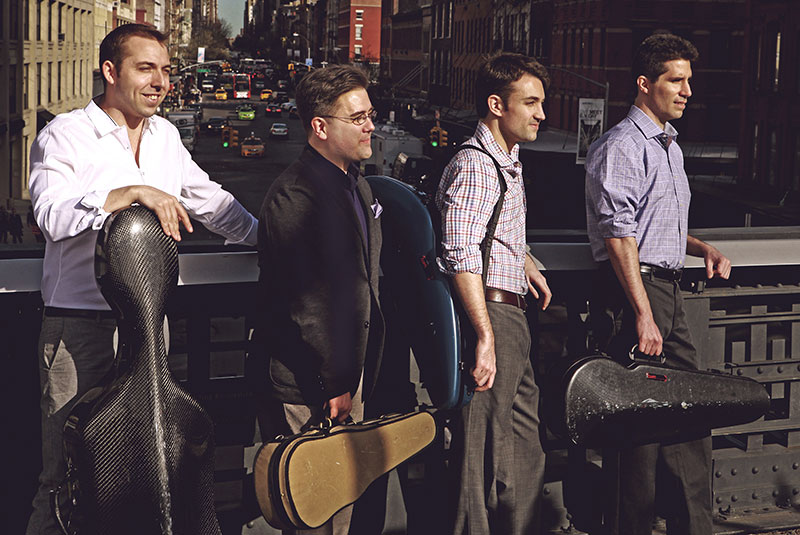
Tuesday, March 20, 2018

Mark Markham and Franz Liszt's Piano Sonata

Mark Markham
SNOW-UPDATE: RECITAL RESCHEDULED FOR THURSDAY (March 22nd) 8pm at WHITAKER
Who: Mark Markham, pianist
What: Four works each by Scriabin, Debussy, and Rachmaninoff on the first half; and Liszt's Piano Sonata in B Minor on the second
When: Wednesday (March 21st, 2018), at 8pm THURSDAY 3-22
Where: Whitaker Center, 222 Market Street in downtown Harrisburg (parking available in the connecting Walnut Street Garage, between 3rd and 2nd Streets)
Tickets: $35, $30 seniors (65+); $5 college students, free admission for K-12 age students with $10 ticket for one accompanying adult.

Franz Liszt's sole piano sonata has a daunting reputation as one of the most challenging works in the entire solo piano repertoire - which is not necessarily the same thing as the most difficult to play. Yes, it's about a half-hour of continuous music making demands on a performer's stamina and concentration, music that is at times demanding and virtuosic, and even in its lyrical, contemplative contrasts, a challenge to keep under control. But it can also be a challenge just to figure out, to make sense of it all - and this post will do a little delving into what's behind one of the great works of the 19th Century.

(You can read the previous post about the works on the first half of the program here.)

* * ** *** ***** ******** ***** *** ** * * 

It's always fascinating to find out how a musician you're going to listen to got started in music – listening to Elvis Presley on a 45rpm then “banging away on an electric keyboard” at 4 until, at 8, he announced he wanted a piano and wanted to take lessons. It's possible he could've grown up in Pensacola, FL, like any number of children taking piano lessons from mediocre teachers if there hadn't been someone who “saved” him until he became good enough to be heard by Ann Schein when he was 16 and who, when he started studying with her later, in “ a very intense decade [during which] she taught him style, real style, and continuity with tradition,” he would begin a 20-year collaboration with the great soprano Jessye Norman.

He does not believe in “specializing” – being an “accompanist” is often a niche one has difficulty breaking out of – and he shows that in five days in Central PA as a concerto soloist with the Harrisburg Symphony this past weekend, playing Ravel's jazzy G Major Concerto, as a teacher offering two master classes at Messiah College – Monday's for vocalists (as a collaborative pianist working with singers, he has also taught as a vocal coach at Peabody) at 5pm, and Tuesday's for pianists beginning at 4pm; and finally as a recitalist playing solo repertoire of the Great Romantic Tradition – Rachmaninoff and Scriabin and Debussy, and one of the cornerstones of the 19th Century piano repertoire, Franz Liszt.

Speaking of “tradition,” the Baltimore Sun said his performance of Liszt's Sonata was a “profoundly musical return to the grand manner in which Liszt’s b minor Sonata used to be played.”

(You can read an in-depth article about Mark Markham, here.)

* * ** *** ***** ******** ***** *** ** * *

Franz Liszt in 1858
If you're not familiar with “The Liszt Sonata” and its monolithic overtones – I've already referred to it as a cornerstone, a giant, a monster of the repertoire and described it as “epic” among other choice adjectives – what's the deal? And what about the “traditions” that come with it, like so much baggage every performer has to contend with?

There are longer pieces – Liszt's lone sonata may take about 30-35 minutes to play, but some crank it up to 25 minutes and, on the other hand, there's Ivo Pogorelich, still something of an enfant terrible, who churns out performances that clock in at 47 minutes, drawing out and dwelling on details, turning practically every measure of the “slow movement” into its own meditation.

There are more “virtuosic” works – flashier showcases for a pianist to exhibit ones technique, especially considering this is Franz Liszt, considered one of the greatest show-offs in an age of virtuosos.

But there are few that have the kind of depth of emotion and drama this sonata possesses (“possessed” is something that might apply to a lot of Liszt's music, perhaps) yet its virtuosity – because it's still hard as hell to play – is always subservient to the music. Curiously, for a work that seems to lack “structure” (many find its constant shifts “chaotic”), willfully going against the composer's tempo indications and playing up ones ability to play fast notes faster than other pianists or banging away as loud as possible just to rattle the dust off the rafters so it sounds “exciting,” all tend to weaken the tightness with which its put together.

In most cases, I'm never one to think of Franz Liszt as an intellectual composer – not on the scale of Beethoven or Brahms or more contemporary composers – but in this particular work, there is a side of him that stands far above the mere brilliance of a lot of his virtuosic music.

Whether this Sonata is “intellectual” or “emotional” is not the point, nor is it important to the average listener. There are times when the music is thrilling, mysterious, dark, demonic as it is heavenly (if not downright angelic), beautiful (if not merely lovely), or glitteringly brilliant (the virtuosic bits) – all, by the way, hallmarks of the 19th Century Romantic-with-a-Capital-R style – because in reality music is a combination of both heart and mind, and it is that combination which allows for so many possible interpretations (or misinterpretations) and why some people like it one way and others, another.

As a way of introduction, I want to offer one example of Liszt in his Virtuoso Mode - and perhaps suggest the difference between something that is "flashy" versus something that requires a high level of technical ability in the service of the greater musical experience.

Here's one of Liszt's favorite “encores” when he was a touring concert artist. It is, in most respects today, regarded as a novelty, perhaps even a bit silly – it is, certainly, over-the-top – meant to bring down the house. It may be “vulgar” to some, “immense fun” to others, but no pianist should attempt it if they can't risk driving it off the cliff. I give you Liszt's “Chromatic Gallop” with the magic fingers of Györgi Cziffra, recorded in 1963.


The trick – aside from hitting all the right notes at the right time – is to keep it from sounding like the Grand Chromatic Stampede...

* * ** *** ***** ******** ***** *** ** * *

Okay, now that we've gotten that out of our system, however you listen to or talk about the Sonata, by comparison, it is not a typical sonata, generally regarded as the pinnacle of “serious” classical music in the first half of the 19th Century – at least as it was understood in Liszt's days in the mid-19th Century. Sonatas, by the way, had become kind of old-fashioned by then, anyway, a throw-back to the Classical Era and the Age of Beethoven: Beethoven, with most of his 32 piano sonatas (just as he did with his 9 symphonies), created a challenge for his successors: how do you write sonatas (or symphonies or string quartets) after Beethoven? Most composers either went on their merry way ignoring the issue, trying to compose as if Beethoven never happened; others grappled with the issues and didn't always succeed in coming to terms with Beethoven's legacy. After all, once Schumann crowned a young Johannes Brahms as “Beethoven's Heir,” you may understand why Brahms took over 20 years to complete his first symphony and why, alas, he never wrote another piano sonata himself.

Liszt's only piano sonata is also not a typical work for him: it tells no story, it does not exist as a dazzling showcase for this “Paganini of the Piano,” it exists simply for itself (one assumes). Unlike the traditional sonata, it is not in the usual 3 or 4 movements where both performers and listeners can at least catch their collective breath between movements. It seems to be a “one movement work” or at least in one unbroken span but yet there's a distinct “slow movement” in the middle, so... But then the finale is not “new material” for a third movement, more of an expansion of themes (or motives) we've heard before. In fact, Liszt makes it more difficult to figure out where certain structural segments begin because he so rarely restates something the same way: it's always developing, evolving, re-examining itself.

So... maybe it's just a single sonata-form movement (which is a different thing, terminology aside) with an exposition and development interrupted by that gorgeous middle bit in a contrasting tempo – Romantic music is all about contrast – and then there's a kind of recapitulation with a coda that goes against what you'd expect.

In the traditional sonata, there is a statement of themes – a development of themes, taken apart and juxtaposed – and then a recap of those themes, reassembled and all their dramatic conflicts worked out for a satisfying conclusion. In the sense of traditional tonality, given this sonata is billed as being in B Minor, the Exposition would begin in B Minor (the “home” tonic) and, by the time a second theme is introduced, digress to some related key; the Development then goes through God-knows what keys before the tension resolves itself to – ta-daah! – the return of the “home” tonic (in this case, B Minor) with a restatement of the thematic material, staying in, say, B Minor (more or less) to the end.

But rather than use two or three themes, Liszt introduces us to three ideas in the first few measures, not over the first few minutes – and everything you hear from here on out is more or less based on those “motives,” some permutation or expansion of those notes and intervals, sometimes even with a completely different mood or tempo but still the same motive.

While the work as a whole may seem mind-bogglingly complex, if you keep these three motives at the opening in mind, you might be able to hang on well enough to understand a bit what Liszt was doing, here:

Motive #1
The opening descending scalar line – not a traditional major or minor scale – is one that, with the change of a note or two, can take on an entirely different (and often sinister) character with each subtle change.

A few measures later: what sounds like the first theme is a series of leaps with a descending whip of an arpeggio:
Motive #2
The third motive really sounds like the second half of this second, leaping arpeggiated "theme" but it quickly takes on a life out its own, with its upward rush of a few notes to repeated staccato notes in the bass that twists around without really going anywhere:
Motive #3

Later on, there sounds like a new theme – grandly, gloriously ascending and accompanied by resounding blocked chords, hymnlike, in the left hand – but it's really a transformation of the opening “scale,” except here sounding more “normal” and ascending to more heavenly heights, completely different in tone and sonority.

One of Liszt's favorite tricks is to turn that dramatic and fragmentary 3rd motive into a long, spinning and thoroughly swoon-filled tune which becomes a necessary dramatic contrast – and yet it's the same material.

If variety is the root of contrast, it's more of an intellectual feat to have so much variety squeezed out of the same few notes, a unifying factor which, psychologically, gives the work a more cohesive sound whether you're aware of it or not.

Without getting into the other technical aspects that have fed theory and musicology PhD mills for generations, just listen to the music.

Here are three you can choose from – one with the score just so you can see what it looks like (whether you read music or not); another that is a favorite recording of mine (with no video, alas); and a more recent live performance for those of you who enjoy watching a pianist grapple with the technical demands (believe me, there's a lot of “sweat equity” in learning and performing a piece like this!).

No. 1 – Krystian Zimerman


No. 2 – Marta Argerich (1966)


No. 3 – Yundi Li (2004)


It's interesting to note that – as any virtuoso would have offered a grand bang-up finale with mighty flourishes and pounding chords to bring an audience to its feet – Liszt ends his sonata with a completely unexpected ending. Suddenly it turns meditative and then resolves quietly to a B Major chord when that scale returns and unsettles everything, leaving the bell-like overtones of a non-traditional cadence hovering over the final low octave. Resolution? Absolutely – a benediction, of sorts, if not the victorious triumph first-time listeners would anticipate.

Franz Liszt's MS with the revised ending

It's interesting to realize, if you look at the composer's manuscript, Liszt crossed out his original ending which was exactly that triumphant, bombastic ending, and then rewrote it, replacing it with one final meditation. Yet if you examine the ink and the pen-scratchings on the paper, you realize that it was probably an instantaneous decision: aside from the red ink which Liszt habitually used for corrections and crossings-out, it's the same black ink, even the same pen in fact, as if Liszt thought, “no, no, that's really too much” and changed it immediately – not a month or a year later as he'd sometimes do with his revisions.

* * ** *** ***** ******** ***** *** ** * *

SOME BIOGRAPHICAL BACKGROUND

Robert Schumann wrote three piano sonatas (one of which he referred to as a “Concerto without Orchestra”), but decided his Fantasy in C was his answer to the Beethoven Sonata Challenge when he composed it in the mid-to-late-1830s (it was composed as a fund-raiser for the Beethoven Memorial in Bonn). And, when it was published in 1839, it was dedicated to Franz Liszt – who, along with Schumann's future wife, Clara Wieck, was one of the greatest pianists of the day.

Though Liszt wrote tons of piano pieces during his career as a touring virtuoso, he was also conscious of Beethoven's legacy. His B Minor Sonata is his only “sonata” though one of his earlier works, “After a Reading of Dante,” is generally called the “Dante Sonata,” and he also composed something called a “Grand Concerto Solo for Piano” – that is, a "concerto without orchestra" later revised for two pianos and usually called Concerto pathétique – which was a direct forerunner of the B Minor Sonata and is, essentially, a continuous three-movement work that could be called a “sonata” in the sense it is a multi-movement work. Just as Liszt's two symphonies are not really traditional “symphonies” in the Beethoven Sense – if anything, they take Beethoven's Pastoral as their starting point, more about dramatic story-telling-in-music than the symphonic architecture of the Classical Symphony inherited from Hadyn and Mozart.

For Liszt, these issues became more conscious once he decided to give up regular concertizing and settled in Weimar as a court conductor and composer – a permanent home and a permanent job that allowed him time not only to compose but to deal with the issues that, as a composer, he hadn't had time to think much about, before – things like “The Sonata Question.”

And his response was to complete his Sonata in B Minor on February 2nd, 1853. While most sources say it was written “1852-1853,” he apparently began work on it almost as soon as he finished that “Grand Concerto Solo,” whetting his appetite for another, perhaps better solution to “how to write a Sonata after Beethoven.” And somewhere, Schumann's Fantasy in C reminded him he owed Schumann a favor: and so, when his sonata was finally printed, Liszt dedicated it to Schumann and mailed him a copy.

Unfortunately, Schumann, in deteriorating health around the time he was introduced to a young man named Johannes Brahms in the fall of 1853, had just been confined to an asylum following his attempted suicide on February 27th, 1854, and so never knew of Liszt's dedication or of the music he'd sent him. One wonders what he might have thought of it: Clara Schumann could make no sense out of it, called it “a blind noise” and having written to Brahms that it “is nothing but sheer racket – not a single healthy idea, everything confused, no longer a clear harmonic sequence to be detected there! And now I still have to thank him – it’s really awful.”

Much is made that Clara never played the piece, some saying that she couldn't play it but it's probably more likely she couldn't figure out how to play it, to make “sense” out of it, and since it was antithetical to her aesthetic preferences, why bother? There's also the likely possibility that its untimely arrival was too painful a reminder of the last time she saw her husband as he was taken away from her: he died over two years later in the asylum and she had never been allowed to visit him during that whole time.

And so, what have others made of Liszt's Sonata?

There is a famous story that Brahms fell asleep listening to it. Brahms, in his early-20s, was traveling and though he had not yet met the Schumanns or yet been crowned “Beethoven's heir,” he was already being courted by the composers of the German avant-garde, mainly Liszt and Wagner. They soon discovered, however, that Brahms' future would lie in a more conservative direction, and the animosity between the two camps, more with their followers than the composers themselves, would continue to the end of the century and beyond.

As the story goes, Brahms and the violinist Remenyi whom he was accompanying on this tour, stopped in Weimar and were invited to “the palace” where Liszt and his acolytes lived. The opulence of the setting, no doubt, annoyed the plain and simple Brahms, born of a humble family in the poorer neighborhoods of Hamburg. Liszt played through Brahms' E-flat Minor Scherzo (which he liked) and started in on the big C Major Sonata (which he liked less: it would enrapture Schumann a few months later) when one of these acolytes urged Liszt to play through his own, newly completed Sonata – which he then proceeded to do. The date of this gathering was, by the way, June 23rd, 1853, four months after he'd completed the piece.

Now, regardless how familiar Brahms (at 21) was with Liszt's music, the fact they'd just gotten into town (whether one can use whatever one called “jet-lag” in those days as an excuse), it's possible between being tired from the journey and bored with this endlessly modulating, never-relaxing tension that was nothing like a sonata as far as Brahms (or Beethoven) was concerned, one could understand Brahms' dozing off (he was not the last person to nod off during a performance of the piece...).

When Liszt finished playing his sonata, he noticed the young man asleep in his chair. He got up without a word and left the room. Later, when Brahms and Remenyi left Weimar, Liszt gave Brahms a cigar box with his name engraved on it – spelled “Brams.” You can take what you want from that.

* * ** *** ***** ******** ***** *** ** * *

For some reason, Liszt himself never publicly performed the sonata – which seems odd, after all. Now in his 40s, he may have given up being the touring virtuoso of his youth, but he still performed publicly as well as privately, and he did play the work for “private audiences.”

The world premiere was given in 1857 by Hans von Bülow, eventually more famous as a conductor and a champion of both Wagner and Brahms (seven months later, he became Liszt's son-in-law, marrying Cosima, one of three children Liszt fathered out of wedlock with the Countess, Marie d'Agoult; in the 1850s, Liszt was living openly with the Princess Carolyn Sayne-Wittgenstein who was still married; Cosima, while married to Bülow, would later live openly with Wagner and bear him three children out of wedlock before her divorce from Bülow was final, a liason that cooled relationships, perhaps somewhat hypocritically, between Wagner and Liszt, but I digress...).

Cosima (l.),  some Hungarian Count, Liszt, & Hans von Bülow (r.) in 1865 (Cosima had been Wagner's mistress since 1863 and around the time this photograph was taken was pregnant with Wagner's first child...)

Let's see, where was I...? Oh, yes...

While it took a while for the sonata to catch on – the ruling anti-Wagner/pro-Brahms critic in Vienna, Eduard Hanslick, thought anyone who liked the piece was “beyond help” – it eventually came to be recognized as the “most significant piano sonata” since Beethoven even if it was more talked about than heard. It still can ignite controversy but not in the way “new music” so often does, more in the sense of what the music “means,” whatever that means. Of course, anything that gradually gains more and more hearings becomes increasingly “familiar” and loses its formidableness, something the age of recordings has helped significantly.

One of the pianists who “owned” the sonata was one of Liszt's students, Arthur Friedheim, whose performance was much admired by Liszt. Curiously, Friedheim recorded the entire sonata on a piano roll in 1905. While it may be arguable to consider it the “definitive” performance, it is, obviously, a performance by someone the composer not only heard but approved.

Friedheim, a Russian-born pianist, was in his mid-40s at the time of this recording and would later have a student named Rilda Bee O'Bryan who would later have a son and student of her own, Van Cliburn.

* * ** *** ***** ******** ***** *** ** * *

In a YouTube video, pianist (and Liszt specialist) Leslie Howard talks about how difficult it is to arrive at what Liszt might have intended when so many performers today base their interpretations on recordings and performances they've heard rather than examining the score – especially the original manuscript which is clearly preserved and available in a printed reproduction. Regarding tempos, articulations and dynamics, for instance, he describes these as “barnacles” that remind me of Toscanini's definition of musical “tradition” as “the last bad performance.”

He also points out that Liszt does not mark a single pedaling in the piece until he reaches m.105 – not that he thought you shouldn't use the pedal until then: like most pianists, he would be aware pedaling was not only a personal interpretation, but also depended on the instrument and the performance venue. These days, students are used to using editions where every pedal indication is taken as gospel and nothing (or very little) is left to the interpretive imagination.

Also, an articulation concerning the third motive to be heard – after the leaping figure with its descending arpeggio, it's that bass-register figure with its repeated notes with its own up-beat figure – that up-beat figure, rather than resolving on-on-the-beat as it's most easy to play, should be kept separate from the up-beat. For one thing, it's what Liszt wrote. In reality, it helps keep the beat steady. I've heard too many performances of this where things just start rushing and you begin to lose sight of the pulse. By following the composer's notation, you can actually keep things clearer. Imagine that!

Here is the complete video which I highly recommend for pianists, piano students, and anyone interested in how an artist turns those notes written on a page into sounds you can hear and enjoy.

* * ** *** ***** ******** ***** *** ** * *

THE FORENSIC MUSICOLOGIST STRIKES AGAIN

The Forensic Musicologist in me wishes to point out just a few “things” that may have consciously influenced Liszt (or not) or where Liszt may have paid tribute (consciously or not) to the past (usually Beethoven). For instance, at one point, he breaks into a free passage marked “recitative” which is an operatic convention in which a singer, in a speech-like phrase not quite melodic, sets up something dramatic to come. In terms of piano music, Beethoven used this in his “Tempest” Sonata though he was very vague about why this suddenly appears (in response, Beethoven told his friend, “read The Tempest” which of course led to its being known as the “Tempest” Sonata).

Speaking of Beethoven...

Liszt's big Fugue theme, an expansion of the Sonata's 2nd and 3rd Motives, is similar in more than just shape to Beethoven's Grosse Fuge introduction with its wide intervals, even to the use of its dotted rhythms that occur a little later.

Curiously - and I think such a coincidence is highly curious - Beethoven's fugue is for a quartet expected to end in B-flat Major, yet the fugue subject is first introduced in G (whether that's G Major or minor or some other key is, also curiously, vague). Liszt's Sonata, advertised as B Minor, also begins with octaves and a vague scale on G before the 2nd Motive begins with its upward octave leaps - on G! Hmmm...

Liszt, despite his abilities as an organist, was not known for writing fugues (though he did – in fact, all composers had to when they were students, for better or worse) so the sudden appearance of this one is startling enough. The academic tribute to Beethoven could've been nothing more than “See, I can do that, too!” Or not.

Wotan's "Spear" Motive, The Ring of the Nibelung
The scalar passage at the opening of the Sonata reminds people of Wotan's “Spear” Motive from Wagner's Ring except in early-1853, when Liszt finished the Sonata, Wagner had not yet begun composing the Ring's music (Liszt finished the sonata in Feb 1853; Wagner didn't begin composing the music of Rheingold until Nov 1853, though it's possible he might have sketched thematic (motivic) ideas earlier – and most likely Liszt had started work on his Sonata (this is the opening material, after all) already in 1849... keep in mind also, Liszt was writing in Weimar, Wagner was living in exile in Switzerland following the 1849 uprisings in Saxony and was under “pain of arrest and execution for treason” should he be caught entering the German states!

Would Liszt have sent him a copy of the Sonata? Perhaps, but the printed edition wasn't available until 1854. So it's just one of those “there are only so many notes to go around” kind of coincidences, perhaps... Did Liszt write a letter to Wagner and say “hey, dig this idea I'm using to open my sonata”? Did Wagner think “wow, that'd make a cool 'Law of the Gods' motive for my new opera...”?

Vernacular aside, one can't really be sure. Somewhere I have a volume of “The Letters of Wagner & Liszt” which seems not to have been unpacked followed the last move, but since this is not meant to be a scholarly article with a specific thesis to prove, let this pass for the moment (on the other hand, I've never heard reference to any such correspondence regarding Liszt's Sonata which is not to say it might not exist). [You can check it here, if you're so inclined: at the moment, time, as usual, eludes me.]

* * ** *** ***** ******** ***** *** ** * *

As other writers have found in Liszt's sonata, the music fairly screams for a screen-play: what does all this dramatic music mean?

Given that 1849 was the Centennial of the Birth of Goethe and everybody – including Hector Berlioz and Schumann – was writing Faust pieces after Goethe's greatest work, it's not difficult to see the standard battle between Good and Evil in Liszt's abstract piano sonata. There are passages that could certainly be labeled “Mephistopheles” and “Gretchen” (she becomes Marguerite in Gounod's French adaptation), and if Faust himself isn't represented by a tune, his conflict is certainly behind the music as he's torn between the Devil and the Woman he loves.

And, the year after he'd finished the sonata, yes, Liszt too began work on a “Faust piece,” his vast three-movement symphony he called “A Faust Symphony” with a movement for each main character (speaking of revisions, Liszt added the choral ending three years later).

Other writers have heard in its music John Milton's Paradise Lost or the biblical story of Adam, Eve, and the Serpent, or simply some autobiographical incident (oh, my...). The problem with such interpretations – I remember reading Melville's Moby-Dick was actually an allegory about the Railroad Industry vs the Great Plains... – is that the creative artist may never have expressly said “This is about...” or “that theme represents...” much less had the opportunity to refute such hypotheses.

Given Liszt's often programmatic mind – he had written the first six of his symphonic poems (stories-told-in-music) in the previous three years – it's quite possible one scenario or another might have presented itself to him during the process of composing the Sonata, but just as one could argue that Beethoven's 5th is about his deafness (since he did specifically mention the “Fate-knocks-at-the-door” motive), isn't it more important to leave it to the listener to decide how to listen to the music?

- Dick Strawser

Saturday, March 17, 2018

Mark Markham: 4x3 with Scriabin, Debussy & Rachmaninoff

Who: Mark Markham, pianist
What: Four works each by Scriabin, Debussy, and Rachmaninoff on the first half; and Liszt's Piano Sonata in B Minor on the second
When: Wednesday (March 21st, 2018), at 8pm SNOW UPDATE: RESCHEDULED for THURSDAY (March 22nd) at 8pm at Whitaker
Where: Whitaker Center, 222 Market Street in downtown Harrisburg (parking available in the connecting Walnut Street Garage, between 3rd and 2nd Streets)
Tickets: $35, $30 seniors (65+); $5 college students, free admission for K-12 age students with $10 ticket for one accompanying adult.

* * ** *** ***** ******** ***** *** ** * *

NOTE: It's one of those Central Pennsylvania Things-That-Happen -- you program Debussy's prelude "Footsteps in the Snow" on the first full day of Spring and you get your 4th Nor'Easter in 3 weeks, but this one's enough to cause us to RESCHEDULE THE CONCERT FOR THURSDAY (3-22-18) at 8pm at Whitaker...

= = = = = = =

It's one of those Central Pennsylvania Residencies when Market Square Concerts joins with the Harrisburg Symphony to present one artist to appear on both their series – and to present a master class at Messiah College. This season, it's pianist Mark Markham who, in addition to being a piano soloist, has been a collaborative pianist (a better term than “accompanist”) with many vocalists like Jessye Norman and who has taught at Peabody School of Music as a vocal coach. So he'll play Ravel's G Major Concerto with the Harrisburg Symphony at the Forum this weekend – Saturday at 8pm, Sunday at 3pm – and offer two master classes: Monday's for vocalists at 5:00, and Tuesday's for pianists at 4:00, both in Messiah College's High Foundation Recital Hall. Then, the Market Square Concerts recital will be Wednesday at 8:00 at Whitaker Center. (I'm not sure why they call these “residencies” because usually the schedules are so jam-packed there's hardly any time to sit still...!)

The program for Wednesday's recital – the focus for these two posts – might look a bit lop-sided. On the first half, there are three composers with four works each (actually two pairs of works each) by Alexander Scriabin, Claude Debussy, and Sergei Rachmaninoff – so, a total of 12 relatively short works but arranged in such an order to present a lot of dramatic and emotional contrast.

Then, on the second half, there's only one piece... however, it's one of the giants, if not “monsters,” of the 19th Century, the Piano Sonata in B Minor by Franz Liszt, one of the towering pianists of the century who was also a trail-blazing composer both revered and reviled by his contemporaries. (You can read it in this subsequent post.)

You can hear some audio clips of Mark Markham's performances on his website, here. And there's an in-depth article about Mark and how he became a pianist, one who's worked for 20 years with soprano Jessye Norman, and studied with Ann Schein, here.

Have you ever wondered why an artist selects the music on the program? In something of a rarity, the program notes includes a commentary by the artist, which concludes with this telling observation:

“Today's program on paper looks very structured for obvious reasons,” Markham writes, “the titles of the works: preludes, etudes and a sonata. Of course, I tried to select pieces with contrasting moods, but the longer I worked on this combination of music, I realized that there was a common element that I had never consciously thought about, which was holding the program together. From the very first measure of the first Scriabin prelude to the very last note of the Liszt Sonata, it is there. Listen for them: Ringing. Tolling. Celebrating. Chiming. Exalting. Delicately. Proudly. Joyfully. Ominously. Mystically. Inviting us. Guiding us. Warning us. Uniting us. Penetrating our souls. They are everywhere, in all shapes, colors and sizes, just like us. Vibrating and resonating in harmony. Showing us the way.”

* * ** *** ***** ******** ***** *** ** * *

Rather than post a video for each of the twelve pieces – a nice round number considering composers often wrote etudes and preludes in sets of 12 – I'm just going to give you a sample pair from each of Markham's three sets.

Scriabin in 1892
First up is a pair of preludes, then a pair of etudes by Russian composer, Alexander Scriabin, all composed between 1887 and 1895 when he was between the ages of 15 and 23! Initially inspired by the music of Chopin, his later music would strain against the traditional boundaries of tonality until eventually he was composing with chords that had no resemblance to what his audience was familiar with. These pieces, however, are full of an intense romanticism that became the bedrock of a Russian school of piano-playing and -writing that reached a more popular climax in the world of Rachmaninoff (coming up...).

Scriabin's Etude Op. 2/1 in C# minor – hard to imagine this is by a teenager – is played here by Vladimir Horowitz during his historic return to Moscow in 1986, telecast live when he was 82.

The emotion of the performance is striking enough, here – perhaps the emotion behind this performance, the pianist's first trip back to his homeland since leaving it when he was 22 – but sometimes it is just as telling to watch an audience listening to the music.

A more recent Russian pianist, Denis Matsuev, performed Scriabin's Etude in D-sharp Minor, Op. 8/12 in 2015 at the Concertgebouw in Amsterdam. Even at 22, you can already hear many of Scriabin's musical fingerprints including the sprawling left-hand arpeggios stretching across wide intervals.


= = = = = = =

Claude Debussy wrote two books of Preludes, each one inspired by a particular image or story and usually described as “impressionistic.” A few years later, his music became less “picturesque” and more abstract, and he composed two books of Etudes, each given a title about the technical difficulty each work presented for the performer.

The 24 Preludes, issued in two "books," were completed by 1910 when he was 47; the 24 Etudes, also published in two books, were completed in Paris in 1915, a year into the horrors of what we know as World War I. He was also already ill with cancer and would die before the end of the war in 1918. Next Sunday, in fact, March 25th, will mark the 100th Anniversary of his death.

The 7th Prelude from Book 1 is entitled “Ce qu'a vu le vent d'ouest” (or “What the west wind saw”) and was inspired by a Hans Christian Andersen tale, “The Garden of Paradise,” a rather grim story which ends with Death approaching a young prince and warning him to atone for his sins since one day he will come for him and "clap him in the black coffin".

In this performance, the pianist is Eloïse Bella Kohn.


While you may be familiar with some of the more gentle preludes like “The Girl with the Flaxen Hair” or “Des pas sur la neige” (“Footsteps in the snow') which opens the Debussy set on this program (just to remind us that snow is still possible even after the first day of Spring...), this prelude is dramatic and technically challenging – and perhaps unsettling, if you're thinking “oh, fairy tale, how cute is this going to be?” Debussy very carefully placed this prelude between the two easiest of this set of preludes – easier in the sense of technical demands as well as listening – no doubt for a greater emotional impact.

Debussy c.1912
Debussy is one of the most “visually-oriented” composers I know, practically everything intending to tell a tale or depict a scene whether it's a painting or some image, or a visually evocative description that can be as vague as “Sails” wafting in the winds. In that sense, his music can be called “impressionistic” whether it is a musical equivalent to the painters' style of the time or not.

But the Etudes are less well-known. Perhaps the reality of the war, so close to his home in Paris, changed his perspective, but in this last phase of his life, perhaps better described as a “mid-life style change” – he was only 55 when he died, by the way – he was becoming more interested in “classical forms,” writing sonatas and these “abstract” etudes focusing on technical demands rather than imagistic sonorities. About the Etudes, he wrote they were "a warning to pianists not to take up the musical profession unless they have remarkable hands."

Markham plays two of them – the one “for the octaves,” prefaced by this one, “pour les sonorités opposées (for opposing sonorities).” It may sound very much like one of the Preludes, full of those layers of lush “sonorities” which define so much of his earlier, more “impressionistic” works and which require skills of touch to balance the different layers. I've posted a recording of Walter Gieseking's with a score so you can see how the layers are written out sometimes on three rather than the traditional two staves for the piano. Or, at 0:52, how a staccato (separated) line in the middle has to be played against the legato (sustained) lines in the upper part of the same hand. Notice also how, initially, the left hand is playing above the right hand.

= = = = =

Rachmaninoff in 1910
Along with Scriabin, Rachmaninoff is part of a great Romantic school of Russian Piano-Playing – both as performers as well as composers. World War I and, here more importantly the ensuing Bolshevik Revolution, had an impact, no doubt influencing Scriabin's more adventuresome (if not “experimental”) late style – who knows where his music might have ventured if he hadn't died in 1915? In Rachmaninoff's case, the Revolution prompted him, a son of the wealthy aristocratic class, to leave his homeland behind, a move that forever affected his ability to compose – well, that, and the need to become a full-time performer to earn money.

Still, the four works Markham closes the first half of the program with were all composed within a period of six years, around the same time Debussy was writing his four works on the program: the Preludes of Op.32 in 1910 and the Etudes-tableux in two sets between 1911 and 1916. At the time, Rachmaninoff was between his late-30s and early-40s. It is hard to imagine a composer of such great concertos – the famous Third was composed in 1909 – essentially giving up composing when he was in his mid-40s. The last work in this set – the impassioned Etude-tableaux Op. 39/9 in D Major of 1916 – was essentially the last work he completed before fleeing his homeland a year later.

Here is Rachmaninoff's Prelude in B Minor, Op. 32/10 recorded by David Fung in Brussels in 2013:


And here is Rachmaninoff's Etude-tableaux in D Major, Op. 39/9 with a young pianist I've not heard of before, but this performance impresses the hell out of me: Szymon Nehring, performing at a festival called “Chopin and his Europe” in Warsaw in 2016. Notice how both of these pieces are full of bell-like sounds. The Russians - not just Rachmaninoff - love their bells!

(With Liszt on the second half, I just have to include this link to Nehring's encore to that recital, one of Franz Liszt's more virtuosic bits, the 5th of the Transcendental Etudes, “Feux follets (Will o'the Wisps).”

* * ** *** ***** ******** ***** *** ** * *

To keep this from becoming one of those book-length posts, I'll save Liszt's epic Sonata for the next installment which you can read here.

- Dick Strawser 
Friday, February 23, 2018

The Escher Quartet: Alexander Zemlinsky, from A to Z

Zemlinsky by Emil Orlik
With this post on Alexander Zemlinsky's last string quartet, we come to the end of the series about February's Market Square Concerts program with the Escher Quartet on Sunday at 4pm at uptown-Harrisburg's Temple Ohev Sholom. You can read a general introduction (including a video of the complete concert they performed in November 2016) and about the quartet by Dvořák on the program in the first post; and about Bartók and his 3rd Quartet in the second

The music on this program originates in a fairly limited geographic area of Central Europe – from Prague to Budapest and back to Vienna – that would fit into an area roughly covering the distance from Pittsburgh to Philadelphia. The works were written within a span of 41 years. While the Bartók quartet may sound more “modern,” the Zemlinsky quartet is chronologically the most recent of the three, composed in 1936.

And going from Dvořák/Prague/1895 to Bartók/Budapest/1927 to Zemlinsky/Vienna/1936 also takes us from the more familiar to the most likely unknown.

Who is Alexander Zemlinsky (or as you might sometimes see him, Alexander von Zemlinsky)?

I admit I'm not that familiar with his music and though I've listened to a few recordings of his works, I don't recall ever hearing anything of his “live,” or (more damning) remembering anything beyond a general curiosity: the fact his music never grabbed me quite the way hearing Bartók's 3rd did when I was a student, reflects more on me than on Zemlinsky, but it's often the fate of composers who, thinking of the Olympics we've been experiencing the past two weeks, never made it onto the medals podium at the end...

Considering how little of Zemlinsky or his music is known, I decided to opt for a more complete life-long biography rather than just discussing the work-in-question. I apologize for the length (if I had more time, I would have written less).

Feel free to scroll down till you find the music videos if you don't have the time or inclination to read everything. But also remember, you can return to the post and read it after the concert. It is – trust me – an interesting story and worth the effort.

* * ** *** ***** ******** ***** *** ** * *

One of the things that fascinates me about him is how a composer with the connections he had never attained a more enduring reputation? He had the backing of no less than Johannes Brahms at the start of his career; and it was a similar kind of mentoring that could've developed into the same kind of sponsorship Brahms gave Dvořák if only the Grand Old Man had lived longer. Along the way, he was championed by Gustav Mahler who conducted two of his operas in Vienna, the first when he was 29. With his friend, sometime student, and eventual brother-in-law, Arnold Schoenberg, he was regarded as a leading light in Vienna's “new music scene.” As a member of various musical organizations in a city full of such “clubs,” he was regarded as an influential musician, teacher, and composer in a city loaded with composers, most of whom are even more unknown than Zemlinsky (if we continue the Olympic analogy, ones who never made it to posterity's preliminary rounds).

Zemlinsky is, in a way, an ethnic miniature of the Austrian Empire, a polyglot political patchwork that imposed Germanic culture across most of Central and South-Eastern Europe from the 16th Century to the end of World War I. His paternal grandfather was of Polish Catholic descent who was born in a part of Hungary now in Slovakia who married an Austrian woman. His maternal grandfather was a Sephardic Jew from Sarajevo in the Balkans (previously part of the Ottoman [Turkish] Empire) who married a Bosnian Muslim woman. When Zemlinsky was born in Vienna in 1871, the entire family had been converted to the Jewish faith. For some reason, the composer's father had added the aristocratic “von” to his name, but as soon as Alexander was gaining recognition as a composer, he dropped the “von” which was, essentially, if not illegal, at least pretentious.

Zemlinsky in 1898
Like many Jews – Mahler, included – there was little hope of advancement or official state recognition unless you converted and so in 1899, Zemlinsky became a Lutheran (which I find odd, considering Austria's bureaucratic government treated Catholicism as a state religion). Not that it mattered, in the long run: like Mahler and like Mendelssohn before them, they were born Jews and therefore always a target of the wide-spread anti-Semitism of 19th-Century German culture that made them and their music a target of the Nazi regime well into the 20th.

* * ** *** ***** ******** ***** *** ** * * 

Most of what we know of Zemlinsky orbits around the peripheries of three people: Schoenberg, Mahler, and a composition student of his who would later become Mrs. Gustav Mahler (and would eventually marry the architect Walter Gropius and the writer Franz Werfel) – Alma Schindler.

In 1900, Gustav Mahler accepted Zemlinsky's new opera, a fairy-tale story called Es war einmal (the German equivalent of “Once upon a Time”). He was 29 and it seemed his whole future was quickly opening before him.

Shortly after the relatively successful premiere (the opera ran for a dozen performances, at least), Zemlinsky was having dinner at a friend's in late-February where he found himself chatting with a beautiful young lady who was studying composition but who had not yet seen Es war einmal though she was quite a fan of the conductor, Mahler. He suggested she should make an appointment to meet him, impressing her with his connection.

Alma Schindler in 1900
In her diary, Alma Schindler confided, “Spent most of the evening talking with Alexander Zemlinsky, the [29]-year-old composer of Es war einmal. He's dreadfully ugly, almost chinless – yet I found him quite enthralling.” The conversation turned to the music of Wagner whom she considered “the greatest genius that ever lived.” When she told him her favorite work of his was Tristan (with its celebration of adulterous love), she wrote “that so delighted him, he became entirely transformed. He grew truly handsome. Now we understood each other. I find him quite wonderful. I shall invite him to call [on me].”

Eventually, Zemlinsky became her composition teacher (it's quite possible he was more dazzled by her beauty than her musical talent) and wrote maddeningly passionate love-letters to her. As one source put it, “she tortured him for about a year” before finally breaking off their relationship on the advice of her family who's primary objection was he was Jewish as well as ugly. Alma's diaries are full of anti-Semitic comments, yet two of her three future husbands were Jewish – Mahler and Franz Werfel. In 1901, Alma Schindler began seeing Mahler and after a whirlwind courtship, they were married in 1902 – once Alma promised to give up composing (he insisted he wanted a wife, not a colleague).

More to the point of Zemlinsky's music, let's return to his friendship with Schoenberg. They'd met around 1895 (the year Dvořák composed his last quartet) when Zemlinsky founded an amateur orchestra in which one of the cellists was a self-taught would-be composer named Arnold Schoenberg. Zemlinsky, though only three years older, gave Schoenberg advice and general instruction about his compositional endeavors, and they became close friends. In 1898, Schoenberg converted to the Lutheran faith – he would later, in the face of the Nazi occupation of Austria, reconvert to his Jewish roots before fleeing to the United States – and in 1901 he married Zemlinsky's sister, Mathilde.

Gerstl's Group Portrait with the Schoenbergs
It would not be an entirely happy marriage: by the summer of 1908, Mathilde was having an affair with Schoenberg's painter-friend, Richard Gerstl, and actually left her family to live with him (it was during this time, he composed his 2nd String Quartet which includes his first foray into atonality in its last movement). She eventually returned to her husband and Gerstl subsequently burned most of his paintings and committed suicide.

[Gerstl's painting, by the way – see above – was done that summer and consists of three couples: Arnold and Mathilde Schoenberg (standing) with Alexander and Ida Zemlinsky (seated in front) with another couple that (not surprisingly) cannot be identified.]

Mathilde died in the fall of 1923 and the following summer, Schoenberg married the sister of a pupil of his, the violinist Rudolf Kolisch, who would found a quartet that would champion Schoenberg's music.

Now, I mention all of this because – regardless of the argument against the impact of biographical details on a composer's music – these events had a direct influence on Zemlinsky's music.

* * ** *** ***** ******** ***** *** ** * * 

But first, let's hear a little bit of what Zemlinsky sounded like before he wrote the quartet we'll hear on Sunday's program: the Escher Quartet has recorded all four of Zemlinsky's quartets, and here they play the opening movement of his 1st Quartet (listen to a few minutes of the opening if you don't have time for the whole thing):


The 1st Quartet was written during the time Brahms had arranged a monthly stipend for the 25-year-old composer so he could concentrate on writing, and after its premiere in 1896 (compare this “sound-world” to Dvořák's last quartet in the first post), Brahms told friends it was “bursting with talent,” though he objected to some of its “modernist” tendencies in an awkward private conversation with its young composer. Basically, he pulled out a score of a Mozart string quintet, pointed out a particular passage as “perfection” and said quite matter-of-factly, “that is the tradition handed down from Mozart – to me.”

Zemlinsky's 2nd Quartet was begun in 1913 in the years following the episode in which his sister had run off with the painter Gerstl, and reflects the emotional turmoil he felt and observed both his sister and her husband going through. This is far from an abstract work built on forms and harmonic formulas! Completed in 1915, the quartet was dedicated to Schoenberg.

It's a vast, dramatic expanse lasting some 40-45 minutes, full of musical cyphers where motives are associated with people or events and sometimes motives that act like “code” created from a person's name. He assigns one three-note motive, D-E-G, to “the self” (basically, himself) and by transposing it to A-B-D, adds an E to create “Mathilde,” keeping in mind B in German is represented by H (that's how you can spell B-A-C-H in musical pitches): so, we have mAtHilDE.

The quartet opens with “The Self” motive as if Zemlinsky is the observer, the teller-of-the-tale. One also hears a chord – a D Minor triad with an added G-sharp – which becomes a “code-sonority” for “Fate,” something Zemlinsky used frequently in many of his later works, as well.


In the intervening 17 years, Zemlinsky's style has gone from being heavily influenced by Brahms to absorbing the chromaticism of Wagner's Tristan. Keep in mind, Schoenberg wrote his Wagnerian Verklärte Nacht by 1900 and his atonal break-through piece, Pierrot Lunaire, in 1912. While Zemlinsky has gone much farther afield from Brahms' advice than the Grand Old Man could ever have imagined, he has never gone nearly as far as Schoenberg: despite the intensity of his chromatic harmony, this quartet is still distinctly tonal and reminds me more of Schoenberg's own 1st Quartet (also in D Minor) from 1905 (and also in one unbroken span of about 45 minutes).

Zemlinsky & Schoenberg
A few years before he wrote the 2nd Quartet, Zemlinsky moved to Prague to become the chief conductor of the provincial German “National” Theater. He was responsible for productions of some 50 operas per season which left him very little time to compose. He wrote two operas of his own and then, in the early-1920s, a vast seven-movement symphony with baritone and soprano soloists setting translations of poems by the Bengali poet, Rabindranath Tagore. In scope, this work was inspired by Mahler's Das Lied von der Erde (“The Song of the Earth,” setting Chinese poets, with tenor and alto soloists). Zemlinsky called his work the “Lyric Symphony” and premiered it in 1924. It is generally considered his greatest work.

He also realized he had taken his style about as far as it could go and so he fell into a period of silence as he tried to figure out what he might write next, what he could do to find inspiration – not unusual for composers facing a “style change.”

Zemlinsky with Cigar
Then two things happened: a festival of contemporary music was held in Prague that year and while Zemlinsky conducted Schoenberg's Erwartung, his vast and psychologically intense monodrama in a totally atonal style, he also heard many new composers he'd been unaware of before. All these different nationalities and styles got his creative juices flowing again.

Then, later that same year, his sister Mathilde died. It was customary in the Jewish tradition for the surviving spouse to wait till the end of the official “year of mourning” before remarrying, but Zemlinsky was shocked when Schoenberg announced two months before the mourning period ended that he was marrying Gertrude Kolisch. Whether Zemlinsky saw this as a “substitution” for his sister or not, he clearly was very distressed by Schoenberg's decision. (Admittedly, this doesn't make a lot of sense to me since, by this time, neither was still active in the Jewish faith, and while Zemlinsky never considered himself religious, his widow told his biographer in the 1980s “My husband did not consider himself Jewish,” but that's another story.)

Around this time, Schoenberg had gathered his friends and students together to introduce his new ideas about “composing with twelve tones,” a systematic approach to organizing pitches in lieu of tonality – and for that matter, the arbitrariness of atonality – something that later became known as “serialism” and something which Zemlinsky opposed. As much as he was interested in the expansion of chromaticism – not to mention working with “numerology” – Zemlinsky was never comfortable with abandoning tonality completely: he felt that would be ignoring the spirit of nature. In the “Theme & Variations” of the 3rd Quartet, then, he parodies Schoenberg's new “serial” style.


By now, Zemlinsky's own musical voice had become less reliant on internal creative processes and more on external reactive impressions: from the imitations of Mahler's Das Lied von der Erde to parodying Schoenberg's serialism. While the new operas he began composing at this time – when he had time – were lush, post-Romantic scores that often ended in some kind of utopian D Major, it was his last quartet that came directly out of his emotions but again inspired by external events: in this case, the death of his close friend, Alban Berg, who died suddenly just before Christmas of 1935.

By this time, Zemlinsky left Berlin with its increasing presence of the Nazi Party and returned to Vienna. His new quartet, started almost immediately after Berg's funeral, became a Requiem for his friend – just as his 3rd Quartet had begun as a threnody for his sister Mathilde. He was always more attuned to Berg's more flexible approach to Schoenberg's styles (both atonal and serial) and since Berg had quoted from Zemlinsky's “Lyric Symphony” in his 1926 string quartet, the Lyric Suite, and dedicated it to Zemlinsky, Zemlinsky in turn wrote a string quartet he subtitled “Suite” – like Berg's, in six movements – though without the intricate and highly personal program (which Zemlinsky was certainly unaware of). [For links to Berg's Lyric Suite, see the previous post for its references regarding the inspiration for Bartók's 3rd Quartet.]

It's not really “six” movements but rather three pairs of movements: each pair being, in a way, reflections of the same material but presented in different and often violently contrasting ways – the way, for instance, memories and a sense of grief can unexpectedly turn into incomprehension and rage.

The first movement serves the purpose, as an introduction, of both a chorale and a funeral march in music that reflects Berg's melodic style but sometimes, in the contrapuntal texture, a conversation of mourners. The “burlesque” of the second movement – in the sense of being a parody – with its scurrying frenzy (reminiscent of the famous 3rd movement of Berg's “Lyric Suite”), takes on an entirely different and often violent surface.

Preludium

Burlesque


The third movement, an adagietto, unwinds slowly in dense threads that might bring to mind Wagner's chromaticism by way of Berg's. In contrast, the Intermezzo is clearly a jazzy if at times delicate, understated dance, before breaking out in a slightly cheeky remembrance of good times past.

Adagietto

Intermezzo


As the Intermezzo's rowdiness subsides, the composer – represented by the cello solo – is left alone with his thoughts in what becomes the theme for a set of variations, a truly elegiac moment and the most personal music of the entire quartet (if not all four of Zemlinsky's quartets). The elegy – labeled “Barcarolle” or “Gondola Song” – is passed from one player to another, accompanied by a haze of reminiscences in the others.

The finale – perhaps thinking back not only to Berg's often complex counterpoint but also the performance Zemlinsky conducted in the mid-1930s of an orchestration of Bach's Art of Fugue – is a Double Fugue that parodies the motive that opens the Elegy. This again reminds me of an overt reference to Berg's Lyric Suite. The movement ends in a blast of “tonal resolution” with the fugue subject in unison, sounding less “modern” than Beethoven's Grosse Fuge and not, perhaps, what one might expect from a work with such mournful origins.

Theme & Variations: Barcarolle

Double Fugue


But as with his operas of the mid-'30s ending with their “utopian optimism,” perhaps even in such a state, Zemlinsky was not yet ready to end his memorial tribute with any sense of negativity – or abandonment of tonality despite the intense chromaticism of the rest of the work – to fade away into nothingness the way Berg ended his Lyric Suite, in desolation.

As luck (or lack of luck) would have it, Zemlinsky had little chance to write much more after this 4th Quartet. In 1938, when the Nazis occupied Vienna, Zemlinsky and his wife Louise fled once more, this time through Prague to Holland, arriving in New York City just after Christmastime, nearly broke. About six months later, he suffered a severe stroke and was no longer able to compose. Several subsequent strokes weakened his health. When his brother-in-law arrived from Europe in 1942 with the remains of his wife's family's fortune, they were able to buy a house in suburban New Rochelle. Four days after they moved in, Zemlinsky died at the age of 70.

It is not a pleasant story, this life, and after putting it together for you, I find I am even more curious about why Zemlinsky – receiving the support of Brahms and Mahler when he was in his 20s, and given the connections he knew – never realized his potential. It is hard to think of him as a failure – given the American attitude about competition, “you don't win the silver: you lose the gold” – but sometimes it makes you wonder why, for some, life (and fame) can be so unforgiving.

Dick Strawser

Thursday, February 22, 2018

The Escher Quartet: Part Two - Bartók's 3rd

The Escher Quartet
The Escher Quartet returns to Harrisburg for our February concert on Sunday at 4:00 at Temple Ohev Sholom on North Front Street with a pre-concert talk at 3:15. They'll be playing Bela Bartók's 3rd Quartet, Alexander Zemlinsky's 4th (and last) Quartet, and Antonin Dvořák's 14th (and last) Quartet.

I covered the Dvořák and re-introduced the Escher in the previous post which you can read here. It also includes videos of the complete concert they performed when they first appeared with Market Square Concerts in November 2016.

For my pre-concert talk, getting “behind” the music you'll hear on this program, I'll be taking on the role of a “forensic musicologist,” looking at these pieces from different aspects and associations with some of the influences on the composers and the pieces they've composed.

This post is about Bartók's 3rd (written in Budapest in 1927)  -- Zemlinsky's 4th (written in Vienna in 1936) gets a post of its own.

Though I won't get into it here, there's an historic “common denominator” that's missing: a string quartet by Alban Berg written in 1926 which he called the Lyric Suite, inspired in part by Zemlinsky's Lyric Symphony of 1923 (first heard in Prague in 1924). For this post, let's just leave it at this: Bartók was inspired to compose his 3rd and 4th String Quartets after hearing Berg's Lyric Suite in early-1927; Berg dedicated his quartet to Zemlinsky; and after hearing that Berg had died just before Christmas Day in 1935, Zemlinsky began his 4th Quartet as a memorial to his friend.

(If you have time and the inclination – or are reading this after the concert – you can listen to Berg's Suite here with score and performed by the Juilliard Quartet; and follow a lecture recorded at London's Wigmore Hall on the very involved and highly personal story behind Berg's music, here.)

* * ** *** ***** ******** ***** *** ** * *

Bela Bartók in 1927
Bartók's 3rd Quartet was composed in 1927, as I mentioned inspired by hearing Berg's new Lyric Suite for String Quartet earlier that year: for Bartók, the "take-away" from Berg's newest piece was hearing new sounds and new ways Berg used to organize these sounds. While the 3rd Quartet is the shortest and “tersest” of Bartók's six quartets, it is also the most outwardly “modern” of them as well, and perhaps the most difficult to understand (in one sense of the word). It is a visceral work, “muscular” in its dramatic contrasts and conflicts, and though certain ideas recur to give the listener something to hang on to, they do not recur in the same sense a traditional work by Mozart or Brahms would, giving the listener certain expectations and satisfying those expectations with the way everything – conflict and contrasts – are resolved.

In the 1920s, Schoenberg had presented his first “serial” works: if atonal music was “not tonal” and sounded too arbitrary, he felt he needed some way of logically organizing his pitches like tonality but without sounding old-fashioned. Music was becoming more “chromatic” – more reliant on the 12 pitches of the chromatic scale rather than the 7 pitches of the traditional Major or Minor scale – since the days of Mozart, especially once we hit the “Music of the Future” of Wagner and Liszt in the mid-19th Century. Schoenberg was just taking this chromaticism one step further. It is unfortunate people point to all the rules and constraints the system (any system) places on a composer without realizing that Classical Tonality has, after all, its own systematic approach with just as many rules and constraints (ask any college freshman music major struggling with Harmony 101).

Bartók apparently – though he never said anything in writing about his style that I'm aware of – agreed with Schoenberg about the need to organize pitches into some kind of systematic approach. He just didn't agree with Schoenberg's apparently pedantic use of it. More to his liking was the neo-Romanticism of Alban Berg's music with its emotional content and often violent use of tension: it is the release of that tension that drives classical tonality and without some kind of anchoring, the idea of “resolution” is only a vague and often unsatisfying veneer. It is the harmonic tension of tonality that supplies “structural satisfaction” to the ear of a 19th Century listener, aware of how it's done or not, and how else one could do that is what Berg – and eventually Bartók – was trying to discover.

Nominally, Bartók refers to his quartet as the Quartet No. 3 in C-sharp, yet as you follow the score and listen to this terse single-movement 15-minute work, you might think “C-sharp Major? He must be bonkers!” Without getting into the theory behind this architectural concept, just listen to ways Bartók creates a mounting tension, reaches a climax, resolves that tension and moves on to the next one. The fact it begins on a C-sharp pitch and ends on a kind of C-sharp chord (not built on thirds like your typical triad) - see below - may bypass you completely, but it's there and, in its own way, creates its own logical sense of “statement – digression – and return” that is the same sense one gets out of a piece in C Major by Beethoven.
Final Measures of Bartók's 3rd Quartet in C-sharp

This performance with the Hungarian Quartet allows you to follow along with the score: even if you can't read the music (or if it goes by too fast to make sense of it), sometimes just seeing the shapes and densities of the music can be illuminating.


Or if you prefer to watch a live performance, here's one with the Amernet Quartet who played an all-Russian program for MSC this past November:


You can, of course, listen to it any way you like: aesthetically for the emotional response to some very dramatic music; or technically to the ways Bartók might be creating those sounds and tensions through his dynamics, his sound effects and the music's harmonic and rhythmic drive, its tension-and-release.

There are sounds here Beethoven or Brahms would never have dreamed of using: the glassy, almost spooky sounds of playing “near the bridge” (sul ponticello) or the different kinds of attacks, especially his use of pizzicato, or plucking the string (in the 4th Quartet of 1928 he would make use of a “snap” pizzicato that became known as “the Bartók Pizzicato”). The way his textures weave in and out, piling up only to be interrupted by slashing chords, sometimes in contrasting rhythms, all manage to create “unexpected expectations” for the first-time listener: where did this come from? Where is that going?

* * ** *** ***** ******** ***** *** ** * *

Bela Bartók was a Hungarian composer, born in a part of Hungary now located in Romania when Hungary was part of the Austro-Hungarian Empire. Usually he figures as one of the leading composers of the 20th Century along with Schoenberg and Stravinsky but is generally not regarded as important as he ought to be: let's say, if there were a Classical Music Olympics, he might have won the Silver for his Concerto for Orchestra and his six string quartets are regarded as the greatest collective achievement in the quartet repertoire since Beethoven and Brahms (that is, all of their quartets, not just a select few as one might hear from Haydn and Mozart).

Bartók, however, followed no school, writers on music will tell you, but then neither did Schoenberg or Stravinsky: other composers followed them. Schoenberg initiated what is called the “Second Viennese School” with his students Alban Berg and Anton Webern, and though few composers specifically imitated Stravinsky despite his winning three successive Gold medals between 1911 and 1914 for his three great ballets, Bartók seems to be a musical “dead end”: he had no disciples.

While Schoenberg, more notorious than famous, was one of the more “reviled” figures of 20th Century music, given the popular reaction against his serial style, and Stravinsky never had another popular success like The Rite of Spring (1914) even though he continued writing up until he died in 1971, Bartók's recognition was late in starting and was brought to a screeching halt by World War II – ironically, all three composers fled Europe to settle in the United States, Schoenberg and Stravinsky settling in the same neighborhood in Hollywood, Bartók trying to make a living in New York City – and he died in 1945 before he was able to regain the ground he'd lost by leaving his native Hungary behind.

But Bartók, like many artists, was not interested in catering to the popular crowd (even Beethoven bowed to popular appeal at times with things like Wellington's Victory and arranging, say, scads of British folk songs because they put food on the table). Works like the ballet The Miraculous Mandarin sometimes offended a potential audience through the amoral nature of its story even before they got to hear the raw music that conveys the story.

Plus Bartók was still “finding his voice” in his late-30s after World War I, a time when Hungary had become a newly independent nation, finally separated from centuries of domination by the Austrians. This was an even more turbulent time in its history between the ravages of politics and the collapsing economy. Bartók was a Hungarian Nationalist, refusing to speak German, the official language, at home. Now, in the social unrest of different factions trying to gain political control after the War, there was less interest in the arts, especially art that reminded them of the violence outside the concert hall. But to him it was more important than ever to find a “Hungarian Voice” not based on old German concepts of what music was.

Bartók had been primarily a pianist and teacher who composed in his spare time. He began The Miraculous Mandarin just before the war ended in 1918, essentially completing the first draft the next year; but he didn't actually finish it until 1924. The world premiere was given in Cologne, Germany, and was a disaster, followed by a 10-minute riot (Bartók himself never saw the work staged). In 1928, he created the orchestral suite from the full score and it has gone on to become a fairly popular concert work.

While completing his 1st String Quartet in 1909, Bartók heard a kitchen maid singing a song of such poignant beauty and simplicity, unlike anything he'd heard before, which, already in his late-20s, he realized was the “true folk music” of his native Hungary. Before that, everything he'd heard was the music of the gypsies, that typical “Hungarian” music beloved of Franz Liszt's Rhapsodies and Brahms' dances (and gypsies, though often associated with Hungary, are not ethnically Hungarian: in reality, their music is the equivalent of “urban pop” music and not actual folk music). This discovery was, to put it mildly, an ear-opener!

Bartók (4th from left) collecting folk songs in a Hungarian village

As a result, he began researching this music and started to arrange some of it into collections of songs and dances himself, even utilizing the style of it (if not actually quoting it) in some of his own music. Having discovered the essence of the “Hungarian Voice,” he was now able to create a less-Western sound to his music and by the 1920s, he was utilizing what he called “imaginary folk music” as the basis of his melodic style. He also incorporated elements of other folk musics he'd heard and collected: music from across the Balkans as well as Northern Africa. While it might not be a way of advancing a Hungarian sound, it did manage to convey a non-Western sound which could be open to many more (and even more diverse) influences than Bach, Beethoven and Brahms.

It is this sense of personal identity that permeates not only the 3rd Quartet but almost everything Bartók would compose the rest of his life.

And where does that leave Alexander Zemlinsky? Well, you can read about him and his 4th Quartet in the next post. (If you think this one's long, you should see what I cut out...)

- Dick Strawser 

Wednesday, February 21, 2018

The Escher Quartet Returns: Part One

Who: The Escher String Quartet
What: Quartets by Bela Bartók, Alexander Zemlinsky, and Antonin Dvořák
When: Sunday, Feb. 25th, at 4:00 with a pre-concert talk by Dick Strawser at 3:15
Where: Temple Ohev Sholom at 2345 N. Front Street in uptown Harrisburg (directions, here

* * ** *** ***** ******** ***** *** ** * *

The Escher Quartet on the road (I'm sure they get more than a bicycle when they tour)
If you were at the concert on November 2nd, 2016, at Market Square Church, you heard the Escher Quartet make their unexpected debut in Harrisburg with Market Square Concerts as a last-minute substitution for the Heath Quartet from England who suddenly had to cancel their American tour (not just their appearance with MSC but also their all-important Carnegie Hall debut). It's a tricky job finding any group that can come in and do the concert date much less the concert's program. And Peter Sirotin was delighted the Escher was available (or were available if you prefer treating the noun “quartet” as a collective plural instead of a singular group, but I digress...) because he'd hoped to engage them at some time in the near future. They didn't have the 5th String Quartet of Michael Tippett in their repertoire, alas – the Heath Quartet made a specialty of performing all five Tippett quartets – so they substituted Bartók's 2nd String Quartet instead along with Mozart B-flat Major Quartet, K.589 (Mozart's next-to-last quartet) and Dvořák's G Major Quartet, Op.106 (Dvořák's next-to-last quartet as well).

So, as conversations evolved during their brief visit to Harrisburg, it was agreed the Escher Quartet would make its own scheduled appearance this season. For this visit, they're again playing Bartók and Dvořák but adding one of their own specialties, a quartet by Alexander Zemlinsky (they've recorded and perform all four as a cycle). This time around, it's Bartók's 3rd and Dvořák's last, the A-flat Major Quartet Op. 105, as well as Zemlinsky's last, his Quartet No. 4.

If you're not familiar with the Escher Quartet's playing, here are two samples recorded in 2015 from “Music at Menlo” – first, the opening movement of Mozart's D Minor Quartet which we'd heard just last month with the Jupiter Quartet:


...and with the Quartetsatz of Franz Schubert, that one movement he completed of a proposed C Minor String Quartet that should, by rights, be called the “Unfinished” Quartet:


And if you did miss the Escher Quartet's concert in 2016, here is the complete program recorded at their Market Square Church performance. The first video opens with the Mozart B-flat, K.598; the Bartók 2nd begins at 23:50. The second video contains the Dvořák Quartet in G Major, Op. 106.
= = = = =


(with thanks to Market Square Church's resident sound- and video-technician, Newman Stare.)
= = = = =

Here is a brief and very informal interview with members of the quartet recorded during a performance in Tel Aviv, talking about the importance of music in their lives as well as how they became the “Escher” Quartet and the visit backstage after one concert where a man named Escher introduced himself. You see, they decided the Dutch artist M.C. Escher with his distinctive dimensionally challenging style (see below), would be an appropriate name for a group that explores various dimensionalities in chamber music. And the man named Escher who dropped by after the concert was M.C. Escher's son, George.


This post will cover the Dvořák quartet: you can read about (and listen to) the Bartók Quartet in the second post, here; and the Zemlinsky Quartet in the third post, here.

* * ** *** ***** ******** ***** *** ** * *

M.C. Escher, Waterfall (1961)
In my pre-concert talk which starts at 3:15 on Sunday, I'll be examining different aspects of the music and the composers' lives, different ways of thinking about what you're going to hear that might illuminate your listening experience.

For historical background and biographical information, you can read Lucy Miller Murray's always engaging program notes on the MSC website here.

And of course, you can read this post either before or after the concert and still find some enlightenment about the world behind the music.

* * ** *** ***** ******** ***** *** ** * *

Usually, I'd present the pieces in “program order” – as you'll hear them Sunday afternoon – but I decided for this one, I'd do them in “chronological order,” starting with the most familiar (Dvořák in 1895), then the less familiar (Bartók in 1927) and finally the least familiar and quite possible the unknown (Zemlinsky in 1936), all composed within a span of 41 years.

Or, for that matter, I could present them in, uhm... a kind of “geographical order,” working in toward the thematic center of Vienna: this would be Dvořák in Prague (which is 156 miles from Vienna as the crow flies, presumably first class); then, Bartók in Budapest (276 miles from Prague); and finally, in the center of it all, Zemlinsky's Vienna (135 miles from Budapest). Kind of an odd route as most tours go, but you'll see why this might work, in a bit...


To give you an idea of the space we'll be traveling musically in this concert, if we started in Pittsburgh, it would be 254 miles to Philadelphia and then 94 miles back to Harrisburg. The distance between Prague and Budapest is only 22 miles longer than it is from Pittsburgh to Philadelphia.

* * ** *** ***** ******** ***** *** ** * *

In April of 1895, Dvořák returned to Prague following his stay in the United States, teaching at the National Conservatory in New York City since 1892. While he was there he composed, among other works, the “New World” Symphony and the “American” Quartet (No. 12), but when philanthropist Jeanette Thurber's money ran out and her pet project, the conservatory, could no longer guarantee Dvořák his “then-staggering” annual salary of $15,000, so the composer (long homesick for his native Bohemia) quickly packed his bags and left for Prague, bags which included sketches for two nearly completed works he'd been composing at the time, the Cello Concerto (Op. 104) and what became his last string quartet, No. 14 in A-flat Major (Op.105).

He'd already been working on this last quartet for six months before he left New York, a rather long time for him. Then he began working on a new quartet which became the G Major, started in November, 1895, and completed on December 9th. This then helped him break through the issues he'd been having with the A-flat Quartet and he finished it three weeks later.

(Through one of those flukes, he was working on two quartets almost simultaneously: No. 14 in A-flat got to the publishers first as Op.105, so No.13 in G Major became Op. 106. Yes, the numbering indicates the order of their completion, but the opus numbers are off-kilter, always confusing. Dvořák was never one to care much about opus numbers and chronology.)

Here's a classic performance with the Cleveland Quartet:

= = = = =

The quartet is in the usual four movements. The opening Allegro appasionato begins with a brooding slow introduction before lifting the curtain on the scene easily described as “a pleasant homecoming.” The second movement is the scherzo, marked Molto vivace and full of the syncopations and cross-rhythms typical of the Czech dance called a furiant. The middle section, the trio, is one of Dvořák's sweeter respites.

The slow movement, Lento e molto cantabile (“slow and very song-like”), is based on a choral song Dvořák composed on Christmas Day (five days before he officially completed the entire quartet). Then the finale brings back the suspenseful mood of the introduction before quickly opening up into a joyous dance – again, the pleasure of a homecoming – before ending with a big, almost orchestral climax to what would become not only his last string quartet but his last chamber work.

Dvořák was 54 when he completed these last two quartets of his. Though he would live another 8 years, he wrote primarily orchestral tone poems and operas, leaving the “abstract” world of chamber music, symphonies and concertos behind for the story-telling world of symphonic poems, three of which, composed in quick succession, got their first performances (basically open rehearsals) four months ahead of the A-flat Quartet – and four more operas including Rusalka of 1900, a Slavic version of “The Little Mermaid” story, with its famous “Song to the Moon.”

When he died at the age of 62 following a bout of the flu in 1904, he left sketches for several works behind, including a couple of possible oratorios and three more potential operas, but no chamber music.

* * ** *** ***** ******** ***** *** ** * *

As I suspected, this post would be too long by the time I get around to the remaining two quartets on the program, so I will continue with the Bartók and the Zemlinsky works in subsequent posts.

- Dick Strawser

Monday, January 15, 2018

Start the New Year with a Celebration


The Cleveland Quartet in the '70s
Peter Sirotin, Artistic Director of Market Square Concerts, introduces the first concert of the new year – and on a weekend that promises to be a bit of a January Thaw, however brief – with this letter:

= = = = = = =
On Sunday, January 21, at 4 pm at Market Square Presbyterian Church, we will celebrate 20 years of the Cleveland Quartet Award given biannually to a young, promising string quartet by eight presenting organizations in the US, including Market Square Concerts and Carnegie Hall.  Two former winners, the Jasper and Jupiter Quartets, will join forces for a program featuring three masterpieces in classical, modernist and romantic styles. Mozart’s D Minor string quartet, which will open this program, combines emotional intensity and depth with elegance and poise, a true masterpiece of the classical era. Debussy’s Quartet in G Minor is widely considered to be a watershed moment in the history of chamber music and represents a young composer’s rebellion against constraints of generally accepted rules of composition in his day. One of the greatest modernists of the 20th century, Pierre Boulez, said that Debussy freed chamber music from "rigid structure, frozen rhetoric and rigid aesthetics." After intermission, both ensembles will share the stage for a performance of Mendelssohn’s Octet composed when he was just 16 years old and considered to this day one of the most exciting and intricate works in chamber music.

...I hope you will join us for a celebration of the award which has launched the performing careers of some of the finest string quartets performing on stage today.

Best regards,
Peter Sirotin, Artistic Director
= = = = = = =

Over the years (at least since I was a student), I've often heard concert-goers wish they could hear [insert name of famous artist here] rather than these young unknown performers on the program. There is, of course, one outstanding reason those famous artists appear less frequently: economics. “Small-town presenters” (which in this country means anybody outside New York City) don't have the budgets to pay their fees even if they can find an opening in their usually far busier touring schedules. Yes, younger, less experienced musicians are “cheaper” (in terms of their fees) but then it should be obvious that at some point even Itzhak Perlman and the Juilliard Quartet were young and inexperienced.

The Jasper Quartet
And how does a “young” chamber music ensemble become experienced and, hopefully, famous? By winning lots of prizes, by garnering a string (no pun intended) of respected venues to add to their bios and, at least in the old days when a major label's contract was even possible, a list of critically acclaimed recordings. It's a process not measured in years but in decades and it is an unfortunate fact the average shelf-life of your typical chamber music ensemble is usually somewhat shorter.

So one of those “great and famous” string quartets, the Cleveland Quartet, new in 1969 – I'd grown up as a student listening to their recordings and putting their stylishly hippy-ish appearance together with their Brahms and Beethoven back in the '70s – has left behind a legacy not only of performing, recording and teaching before they retired in 1995, but also of a “Prize” that every other year has given much-needed boosts to young quartets judged capable of making that leap into wider acceptance and growing fame.

How many of these will become the “great and famous” quartets of the future is anyone's guess. But it's an important step in the on-going cycle of the Arts – in this case, performance → reputation → teaching → new performers in the next generation – that has kept generating that future for longer than anyone in our audience is likely to remember.

And so this year is the 20th Anniversary of Market Square Concerts wisely (and foresightedly) jumping onto the Cleveland Quartet Award's bandwagon when Lucy Miller Murray, MSC's indefatigable founder, raised the necessary money with the help of like-minded forward-thinkers to ensure that each prize-winner would appear in Harrisburg – as well as seven other locations, guaranteeing a wider exposure in places ranging from Carnegie Hall in New York City to Kansas City MO.

(You can view the list of the ten award-winning quartets here.)

This concert brings together two of those winners: the Jasper Quartet (formed in 2003, winner of the Cleveland Quartet Award in 2012) and the Jupiter Quartet (formed in 2001, winner of the award in 2007).

The Jupiter Quartet will open the program with Mozart's D Minor Quartet from the “Haydn” set, K.421. Then the Jasper Quartet will play Debussy's Quartet. After intermission, they will combine to play the Mendelssohn Octet for Strings.

(You can read the article in The Burg here; and Lucy Miller Murray's program notes, here.)

As a celebration of “young quartets,” it is appropriate the music they'll be performing is by “young” composers – that is, those great and famous composers in Classical Music's pantheon, writing when they were young.

Of course, Mozart, who died at the age of 35, is always young, but his D Minor Quartet was written when he was 28 and in particular awe of a set of new quartets the era's Grand Old Man, Franz Josef Haydn, had just published.

Here is the Cleveland Quartet – since we're celebrating their legacy – with the complete Quartet K.421:
= = = = = = =

= = = = = = =

While the program would seem to be the standard “Classical – Romantic – Modern” formula, the Debussy Quartet might be considered a staple of the 20th Century Repertoire, but it was composed in 1893 when its composer was 31.

While Debussy was a slow and pains-taking composer who often abandoned or destroyed unpromising works, this Quartet is still an early work in his out-put compared to Mozart who, at the age of 31, was writing Don Giovanni. (Mozart would die four years later...)

I like the comment Peter quoted in his introduction, how French composer and conductor Pierre Boulez said Debussy 'freed chamber music from "rigid structure, frozen rhetoric and rigid aesthetics."' This is very true, especially considering the year Debussy composed his Quartet (one of two he had planned at the time), Brahms was writing his Op.118 and 119 piano pieces in the midst of those chamber works with clarinet (he died four years later). Curiously, Boulez is the composer who might be credited, then, with locking 20th Century French music back into the “rigid structure, frozen rhetoric and rigid aesthetics” of his uncompromising total serialism not only through his international fame but also given his political power in the Parisian arts scene that hampered non-believers like Henri Dutilleux all his life (unable to get French commissions without Boulez's aesthetic approval). But that's another story (and besides, the mensch is dead...).

Here is the Cleveland Quartet's recording of the complete Debussy quartet, from their Telarc CD:
= = = = = = =

= = = = = = =

Mendelssohn, in this case, wins the “Youth Prize” for his Octet for Strings, written originally as a birthday present for his violin teacher who played first violin at the premiere, one of those legendary Sunday morning musicales at the Mendelssohn Family's mansion in Berlin (the composer deferentially played 4th Violin).

The Octet is one of those masterpieces that transcends the category “of chamber music” to be recognized as one of the most flawless works ever composed (not my own hyperbole). While the scherzo is perhaps the most famous excerpt of the whole work, if the opening doesn't amaze you, the finale is even more amazing, with all that constant energy and then – OMG – that sudden “pause” in the forward motion before spilling you on toward the ending!

And Mendelssohn was 16 at the time...

Here is a video of the Jupiter and Jasper Quartets playing the first movement of the Mendelssohn Octet this past June in Rockport, ME.
= = = = =

= = = = =

And since I gave you that tease about the finale, here's the Cleveland Quartet (again) with the Meliora Quartet which they mentored during their years of teaching at the Eastman School of Music (whose motto is “Meliora” – Latin for “Ever Better”):
= = = = = = = =

= = = = = = = =

Not a bad way to end a concert, no? – and certainly not a bad way to end a concert dedicated to celebrating the legacy of one of the great and famous string quartets of the 20th Century, twenty years after their retirement still perpetuating that Classical Music they loved so well and which so many people have been saying has been “dying” for... well, for as long as people have been playing “Classical Music.”

* * ** *** ***** ******** ***** *** ** * *

A personal foot-note, if I may (you, of course, have the option of ignoring it).

Back in the mid'70s, I missed out on the Cleveland Quartet's residency at Eastman, finishing my course-work for my doctorate in 1974, two years before they arrived to teach there. But the school had had many fine string teachers – if not its own string quartet – not to mention chamber music coaches.

I remember, a few years later, running into a newly graduated violist from Eastman who had been a freshman my last year there as a teaching assistant (he sometimes sat in on my 9:00 theory class if he missed his regular 8:00 class). It was, I think, the fall of 1978 which would mean I'd just moved into New York City (it might have been a year or so earlier during a visit), but I ran into Larry somewhere around Broadway and 72nd, give or take a few blocks, and he told me he had recently started a quartet with some friends of his and that it was so far a very good experience. They'd just “turned pro.”

I asked him what they called themselves and he said “We'd decided on 'Emerson'!” “Very cool,” I said, and I wished him a long and happy quartet-life.

So far, over 40 years later, Larry Dutton is still the violist in the Emerson Quartet which has certainly gone on to become one of those “great and famous” quartets! And I remember standing on that street corner back in 1978 just a day or so after having had a tiresome discussion over lunch with some “older” acquaintance (younger than I am now) worrying over “what was classical music coming to!?” “Classical Music is dying,” he'd whined, “young people don't go to concerts, and where are the new performers going to come from? And the composers – God, don't get me started on the composers!” Something to that effect.

Odd – I've forgotten who that was. I wonder what ever became of him?

- Dick Strawser