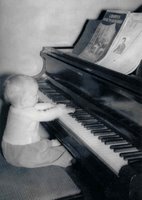
This summer, Market Square Concerts presents Curtis on Tour, performers from Philadelphia's famed Curtis Institute of Music, both faculty and students. It's an exciting "internship" program in which students from Curtis get to tour and perform with faculty members. Summermusic 2016 begins Friday at 8pm with works by Beethoven and Mendelssohn and in between more recent works by John Novacek and David Ludwig. The 2nd Concert is Sunday at 4pm and includes Schubert's String Trio D.581 and Mozart's G Minor Piano Quartet, plus the Piano Quintet by Edward Elgar. The 3rd Concert takes place Tuesday at 6:00 (not a typo) and features three American Quartets - Samuel Barber's Quartet (the home of the original Adagio for Strings), the quartet Dvořák composed while taking a break from New York City, and the first public performance of a quartet inspired by summers at Cape Cod by Jonathan Bailey Holland. You can read about these works in various posts on the Market Square Concerts blog.
* * ** *** ***** ******** ***** *** ** * *
The final work on the second program of Summermusic 2016 – Sunday afternoon at 4pm at Market Square Church – is the Piano Quintet in A Minor by Sir Edward Elgar, the composer best known for giving us the "Enigma Variations" and something to march to at graduation. Considering how few piano quintets there are in the repertoire – and the ubiquity of hearing Brahms', Schumann's, Dvořák's, and Shostakovich's and occasionally, a distant fifth, Franck's – you could ask why you don't hear this one more often (if at all)?
Here are three videos – if you don't have time to listen to the complete work (it's 37 minutes long), at least view this performance by members of Curtis on Tour with the Curtis Student Quartet and faculty pianist Meng-Chieh Liu. It's the final minute of the piece and bodes well for an exciting finale to this concert!
= = = = = = =
= = = = = = =
Here's the complete work – all three movements – with Ian Brown and the Sorrel Quartet, complete with score.
= = = = = = =
= = = = = = =
If you have the time, I recommend Bruce Adolphe's lecture about the 1st Movement of Elgar's Quintet with Gilbert Kalish and the Amphion Quartet, courtesy of the Chamber Music Society of Lincoln Center:
= = = = = = =
= = = = = = =
It begins with an introduction to Elgar as an English composer at a time when English music was, to most Europeans, little different from our modern perception of British cooking. At c.13:00, he begins talking about the music and then the performers play the first movement, beginning around 58:30.
* * ** *** ***** ******** ***** *** ** * *
Brinkwells in 2010
The summer of 1918 – with the “Great War” (later to be known as the 1st World War) continuing on the Continent into its 4th year, casting its gloom and pall at the death of Britain's young men across the land – was meant to be a respite from the daily war-time life. Elgar, recuperating from an illness, spent the time with his wife and daughter at Brinkwells, a country house in rural Sussex with several acres of grounds, south of what is now the South Downs National Park. It was owned by a painter-friend of the Elgars named Rex Vicat Cole, a landscape artist, who had enlisted in the war. In his absence, the Elgars rented his cottage near Fittleworth and turned his studio into a music room.
They would spend two summers there, and in all Elgar would work on four new compositions. The three he began that first summer were all chamber pieces and he had composed little chamber music during his career, so in that sense this was an auspicious summer.
The Studio at Brinkwells
"Imagine then an old oak-beamed cottage set on a wooded hill, and across an old-world garden another building resembling an artist's studio. From this studio there is a view of a hill sloping down to more thickly wooded country; beyond this the river Arun, and, in the distance, the heights of the South Downs are visible. Near the cottage, rises a strange plateau, on which there are a number of trees with gnarled and twisted branches, bare of bark or leaves - a ghastly sight in the evening, when the branches seem to be beckoning and holding up gaunt arms in derision." (quoted from an Elgar website)
Elgar enjoyed walking in the countryside though at this time, I'm not sure he was bicycling as much as he used to. There was a legend associated with these trees in a nearby park, “sad 'dispossessed' trees,” according to the composer's wife, Alice, said to be the remains of some Spanish monks who, having performed some sacrilegious rituals there centuries earlier, had been struck by lightening and converted into these trees.
Elgar had apparently planned his summer reading before leaving London and ordered several novels by Edward Bulwer-Lytton from the library – the author most famous for the opening line of his 1830 novel, Paul Clifford, “It was a dark and stormy night...” (written when the author was 27). At the time he'd decided to compose this quintet, Alice reported her husband was reading Bulwer-Lytton's A Strange Story.
I can't say I would recommend reading it unless you really want to put yourself in the composer's frame-of-mind. Like many novelists of the Victorian Era, Bulwer-Lytton is one that quickly fell out of fashion and is today remembered primarily for that opening phrase which has spawned a contest to create a parody of “bad literature,” a sad legacy for a writer who was in his day not only successful but, for a time, quite popular.
a young Bulwer-Lytton
He did, however, give us other often-quoted lines: “the almighty dollar” is Bulwer-Lytton's as is “the Great Unwashed” not to mention one I always attributed to Shakespeare it was so ubiquitous, “the pen is mightier than the sword”! Two of his novels inspired operas by Wagner and Verdi, though both are overlooked in the operatic repertoire as well: Rienzi, Last of the Roman Tribunes inspired Wagner; and Harold, Last of the Saxons, became Verdi's Aroldo.
Regardless of the supernatural elements of A Strange Story or the legend of the Spanish monks “inspiring” Elgar to write a programmatic work, the Quintet, which Elgar admitted contained some “ghostly stuff,” opens with a direct quotation of the opening of the Gregorian chant, Salve regina (there are at least two that I've found, but this is the one Elgar quotes in the opening and which recurs throughout the first movement).
Whether it's there because of any specific association with the ill-fated monks or just because Elgar, a life-long Catholic, liked it or even used it purely coincidentally, the text associated with it – “Hail, Queen, Mother of Mercy” – might certainly also have been on his mind because of the on-going pall of the war.
And don't keep asking me why there's this unexpected Spanish dance for a second theme (as fans of Monty Python can tell you, "I wasn't expecting the Spanish Inquisition"...). It follows the rather Brahmsian main theme: considering this is 1918, writing like Brahms (which was what most English composers did in the 1870s and '80s) was already old-fashioned and the juxtaposition of serious Brahms with what sounds like cafe music probably struck first-time listeners as a bit incongruous. Then, there's that rhythmic motive heard in the strings at the opening which also pervades the movement, giving the whole a kind of “ghostly” unease.
Elgar's favourite pub near Brinkwells
This first movement struck many of Elgar's friends as being “something new” in his expression, unlike anything he'd composed before, especially the modality of the opening material and its overall episodic nature. The second and third movements were less so, apparently – the slow movement is definitely the expressive core of the piece (bringing back memories of the world of "Nimrod" from the 1899 Enigma Variations); the last movement keeps slipping back nostalgically into the first movement – but there were few works left to be written, after this. Appalled by the war and in ill health, Elgar eventually composed four works those two summers at Brinkwells: there was also the String Quartet (which he hadn't finished when he began the Piano Quintet), the Violin Sonata and, once the war had ended, the Cello Concerto. Curiously, while the Quintet is in A Minor, all three of the other works are in E Minor which seems a bit odd. Is there some association with this key and the mood the composer was in at the time?
By 1920, Elgar's music had already fallen out of fashion – he was now 63 – and perhaps, as often happened with other composers at that point in their lives (not so much the age as the loss of esteem), Elgar ceased to compose. It was his wife's death later that year, however, that brought his creativity to a standstill. Though he'd been appointed “Master of the King's Music” in 1924, he composed little for such royal occasions as the post required: his “Nursery Suite,” written the celebrate the recent birth of the Duke of York's younger daughter and dedicated to the Duchess and both her daughters (the older daughter, by the way, now Queen Elizabeth II, just turned 90), was based entirely on sketches from notebooks dating back to his own youth.
In the early-1930s, as he approached his 75th birthday, his music began to experience something of a renaissance which inspired him to begin a new opera (The Spanish Lady) and a Third Symphony but these were left unfinished when it was discovered in 1933 he had inoperable cancer and died about four months later.
So, one of the questions you might consider while listening to this rarely-heard Piano Quintet, whether it's new or already familiar to you, is “what new directions might the Old Boy have discovered? And how might he have then realized those possibilities?” (Okay, technically, that's two questions...) Given that this became one of his last works (and thinking especially of the Cello Concerto), you could also wonder, "what have we lost?"
- Dick Strawser
= = = = = = =
Photo credits: the three photos of Brinkwells and the nearby pub were taken by a Melbourne-based blogger posting at "Art and Architecture mainly"
Antonio Salieri has gotten a lot of bad press over the centuries since Mozart's death – if you're not familiar with his reputation, with or without the film Amadeus, he's the guy accused of poisoning Mozart – but there's a three-fold connection with the first two concerts of Summermusic2016. While there's no Salieri on the program and the obvious one would be Mozart, there are two of his pupils represented: Beethoven and Schubert.
The first program, Friday night at 8:00, opens with the third of the Op.12 Violin Sonatas Beethoven dedicated to his former teacher, Salieri. You can listen to the Sonata in E-flat, Op. 12/3 in this previous post and read more about it – especially the critical reaction to it – in a subsequent post.
And the second program – Sunday afternoon at 4:00 at Market Square Church – opens with a string trio that Franz Schubert wrote in 1817 not long after he'd studied with Antonio Salieri – 26 years after Mozart's death. The first half concludes with Mozart's Piano Quartet in G Minor which you can listen to in a separate post, (Link TBA).
(Incidentally, another one of Salieri's composition pupils was Mozart's son, Franz Xaver, sometimes known by his marketing du plume Wolfgang Amadeus Mozart Jr. One assumes that if the family believed the rumors about Salieri's role in Mozart's death, Constanze would hardly have allowed their son to study with his father's murderer...)
The second program concludes with the Piano Quintet of Sir Edward Elgar which, to my knowledge, has no such connection with Salieri, but subsequently gets its own post, you can listen to it here and read about the summer get-away where Elgar composed it, plus take in a lecture by Bruce Adolph about the first movement and read about the strange goings-on that inspired at least the opening of the piece.
It will be performed by the members of the not very imaginatively named Curtis Student Quartet (certainly more direct and fluid than calling it the Ad Hoc Quartet) with faculty pianist Meng-Chieh Liu. This brief video clip captures them in the final minute of the quintet:
= = = = = = =
* * ** *** ***** ******** ***** *** ** * *
To sum up Salieri's association with Beethoven, Jan Swafford, in his recent biography, Beethoven: Anguish & Triumph, puts it succinctly:
“So 1798 was a busy and prolific year... [Beethoven] kept in touch with Haydn [whom he'd studied with after his arrival in Vienna] visiting the master and showing him his new work. Probably in this year, he began to study vocal composition in Italian with court Kapellmeister Antonio Salieri, then forty-seven, once called 'the musical pope of Vienna' and famously the rival of Mozart [who died in 1791]. Salieri was still turning out old-fashioned operas and was active as a conductor and teacher.”
Young Beethoven's reason for seeking out Salieri was
__(a.) Vienna was a city where opera reigned supreme: if you wanted to make your fortune, you did it as a composer of opera (even Schubert knew that in the 1820s);
__(b.) Salieri was still a very important composer in the world of opera even if his court position technically was “director of the Imperial court chapel”;
__(c.) serious opera in German-speaking Vienna was still written and sung in the Italian language (something Beethoven did not speak) such as Mozart's Marriage of Figaro (his Magic Flute was sung in German but then the singspiel, an opera with spoken dialogue, was the populist equivalent of what today might be a high-class Broadway musical);
__(d.) all of the above.
The correct answer is (d.).
It could be argued Beethoven might have studied with – or, more accurately, taken lessons from – Salieri earlier than 1798, as Swafford implies (that “probably” is open to some wiggle room). Beethoven's concert aria, Ah! Perfido was performed in 1796 but it would seem logical this Italian aria, setting Metastasio's text from 1737, might have been shown to Salieri if not originating as a lesson's assignment. There is also evidence Beethoven at least visited Salieri later, as well: Salieri's student Moscheles noted how, in 1806, he'd shown up for a lesson and found a note on Salieri's desk that “The pupil Beethoven was here.” Given their stylistic differences, it's unlikely that would've been a social call: maybe he was coming by with some practical question? His opera Fidelio (then still called Leonora) had been premiered in November, 1805. Of course, it was in German and Salieri would not have approved.
Anyway, Salieri, who saw Mozart as a rival, certainly would find the willful Beethoven a difficult student. Swafford continues with the anecdote, how Salieri “thrashed” one of his assignments, setting an old-fashioned Italian text “in a suitable style” (one cannot imagine Beethoven, then in his late-20s, subjecting himself to setting a late-Baroque text from the 1730s “in a suitable style”!). “One day, Beethoven ran into Salieri in the street... and Salieri complained that he hadn't been able to get the tune out of his head. 'Then, Herr von Salieri,' Beethoven grinned, 'it can't have been so utterly bad.'”
Still, even though the violin sonatas of 1798 might not be examples of what he'd learned from Salieri's lessons (however few or many there may have been), Salieri was a leading political force in the Viennese musical scene and the appearance of this dedication – which had to be accepted by the dedicatee – was as much a political endorsement as it was a marketing ploy and certainly not, as we might think it today, an expression of gratitude or even endearment.
Here is a 2015 live performance of the 1st movement of Beethoven's sonata with violinist Ariana Kim and Roger Moseley playing a fortepiano that is closer in sound to what Salieri might've heard in 1798:
= = = = = = =
What the critical reaction might have been at its first hearing will involve, as you might expect, a separate post which you can read here (link TBA).
* * ** *** ***** ******** ***** *** ** * *
Now we skip ahead nineteen years into the new century. Remember how we learn that Romanticism began in 1800 (give-or-take)? If you think Beethoven's 1798 sonata “sounds like Mozart,” wait till you hear what Schubert was writing in 1817.
Here is a performance of the String Trio in B-flat Major, D.581 (complete) with violinist Oleg Kagan, violist Yuri Bashmet, and cellist Natalia Gutman:
= = = = = = =
= = = = = = =
Franz Schubert 1817
Consider, first of all, when Beethoven was writing his Op. 12 violin sonatas, Franz Schubert was 1 year old. A child prodigy, having written a masterpiece like “Gretchen am Spinnrade” when he was 17, Schubert had written several string quartets for his family ensemble (his father was an amateur cellist) and already five symphonies for his school orchestra or a group of friends who formed a “reading orchestra” at a local merchant's house by the time he wrote the string trio on the second Summermusic program. He was now 20.
Schubert was a regular student of Salieri's, studying with him from the summer of 1812 when he was 15 years old, and even though we don't know when the lessons stopped, there are corrections in Salieri's handwriting on an Italian aria written in December, 1816.
One of the works Schubert composed, probably as an assignment for Salieri, was a string trio in B-flat Major. It is, however, only a single movement with the briefest start of a second before the manuscript breaks off (presumably, he reached a road-block and stopped composing, much as he did after starting the third movement of what later became known as the “Unfinished” Symphony, a work in which he only completed two movements). This, incidentally, was a habit of Schubert's – there are several symphonies, quite a few operas, numerous songs as well as the famous “Quartettsatz,” or Quartet-Movement which also has the start of a quickly abandoned second movement.
I mention this earlier string trio, composed in October, 1816, only because it's in the same key and was written a year before the four movement trio on the program, written in September, 1817. Confusion is not something Schubert would have been concerned about at the time...
Whether Schubert was still studying regularly with Salieri in 1817 or not isn't important. His influence, however, continued long after that last lesson.
On June 16th, 1816, Schubert, then 19, made a rare journal entry, following a party given to celebrate the 50th Anniversary of Salieri's arrival in Vienna:
= = = = = = =
“It must be fine and enlivening for an artist to see all his pupils gathered around him, each one striving to give of his best for his master's jubilee, and to hear in all these compositions the expression of pure nature, free from all the eccentricity that is common among most composers nowadays and is due almost wholly to one of our greatest German artists [i.e. Beethoven]; that eccentricity which combines and confuses the tragic with the comic, the agreeable with the repulsive, heroism with howlings and that which is most holy with harlequinades, without distinction, so as to goad people to madness instead of soothing them with love, to incite them to laughter instead of lifting them up to God. To see such eccentricity banished from the circle of his pupils and instead to look upon pure, holy nature, must be the greatest pleasure for an artist who, guided by such a one as Gluck, learned to know nature and uphold it in spite of the most unnatural conditions of our age.”
= = = = = = =
Beethoven in 1816
Beethoven, by 1816, had completed his 7th and 8th Symphonies, his last Violin Sonata, the “Serioso” Quartet and that summer was working on his Op.101 Piano Sonata.
While such a statement was clearly written under the influence of a celebratory evening with his teacher and like-minded students, it's very likely, following performances of several students' works in tribute to their master, there was quite a lot of shop-talk about (and most likely, against) the leading exponent of Contemporary Music in Vienna at the time.
It is also interesting note that the very next day Schubert composed a celebratory cantata for the teacher of one of his law-student friends, “Prometheus” it is called, listed in the Deutsch catalog as D.451, the music long since lost. That night, young Schubert wrote in his journal: “Today I composed for money for the first time.”
Moving ahead to the next year, Schubert, now 20, was living with the family of his close friend, Franz von Schober. He had met the singer Johann Vogl who would soon champion his songs and many of the 65 songs he composed that year were specifically for Vogl to perform (including Die Forelle, D.550, that spring). Prospects were bright at the start of the year but diminished quickly and, without income or a place to live, he was forced to return to his father's house and again take up a teaching job at his father's school. He remained there until the following summer, frustrated at having to teach boys their ABCs, stuck in what might, out of necessity, become his professional future. And so he threw himself into his music.
The String Trio D.581 (the complete four-movement one) was written in September. It may have been intended for “household performance” with his brother Ferdinand, a fine violinist and teacher (the same month, Schubert wrote a Polonaise, also in B-flat, for solo violin and strings for his brother who performed it publicly the following year); the composer playing the viola; their father, the cello. Regardless, the Trio did not receive a public performance until 1869, forty-one years after Schubert's death, at a concert in London where the violinist was none other than Joseph Joachim. If you remember Curtis faculty cellist Soo Bae's recording of Alfredo Piatti's caprices for solo cello, Joachim's cellist at that London concert was Alfredo Piatti. (Alas, I can't find any information about the violist Blagrove, but then such is the fate of many a violist...).
It is also interesting to note that the following month, Schubert began work on what he considered his first “mature” symphony, exploring the greater realm of the symphonic form, what we know as his Symphony No. 6 in C Major. It was intended to be “ein grosses Symfonie” in that the orchestra would include trombones which, not to encourage trombonists more than necessary, automatically made it a “great symphony” – that is “gross” in the German sense of “large.” Ironically, because he wrote another symphony in C Major also with trombones and which, on a much grander scale, has always been known as “The Great C Major Symphony” – truly, one of the masterpieces of classical music – this 1817 C Major Symphony is now called “The Little C Major Symphony” (making it in effect the Little Great Symphony...).
It is interesting to note that, at this point, no longer studying with Salieri, his model for the expansion of form that became the hallmark of his later style – the great quartets and sonatas of his last few years, the scope of the “Unfinished” and “Great C Major” symphonies, and especially a work like the C Major String Quintet – were fueled not by his teacher Salieri but by the sheer force of... Ludwig van Beethoven.
It's obviously summertime, unless you've been afraid to come outside from under your air-conditioned rock, and now that the 4th of July Weekend has passed (before you know it, Labor Day's around the corner), that means it's time for Market Square Concerts' Summermusic 2016.
Which, I quickly point out, consists of three concerts, all three taking place inside at Market Square Church (on the square in downtown Harrisburg with its own garage right next door).
The first is Friday, July 15th at 8:00 – followed by Sunday's concert at 4pm and Tuesday's concert at 6:00pm (yes, that's 6pm)!
This year is also a little different than years past: our performers are part of Curtis On Tour, faculty and students from Philadelphia's famed Curtis Institute of Music going on-the-road that's part of the school's “learn by doing” philosophy.
Their first concert includes Beethoven's Violin Sonata in E-flat, Op. 12 and Mendelssohn's 1st Piano Trio (the one in D Minor) – and in between, two more recent works, the Four Rags by John Novacek for violin and piano and David Ludwig's Swan Song.
And Tuesday evening's concert – which begins at the untraditional time of 6:00 – three American quartets, if you will: Samuel Barber's Quartet (home of the original Adagio for Strings), and the quartet Antonin Dvořák composed while vacationing in Iowa and always known as the “American” Quartet.
But Tuesday's concert opens with the newest work on the series, the 2nd String Quartet by young American composer Jonathan Bailey Holland. Inspired by summers at Cape Cod, it's called “Forged Sanctuaries” and was commissioned by Curtis on Tour and the Cape Cod Chamber Music Festival to celebrate 100 years of the National Park Service. This will be it's first performance ever, so it doesn't get much newer than that. I'll tell you more about the composer and his music in a subsequent post.
* * ** *** ***** ******** ***** *** ** * *
The First Program of Summermusic 2016
Friday's performers include faculty members from Curtis, violinist Bella Hristova, cellist Soo Bae, and pianist Natalie Zhu.
Bella Hristova won the 2013 Avery Fisher Career Grant and at the award ceremony, played the “Red Violin Caprices” by John Corigliano, music for solo violin based on his film-score for The Red Violin:
= = = = = = =
= = = = = = = =
Natalie Zhu, winner of an Avery Fisher Career Grant in 2003, has recorded some Mozart sonatas with Hilary Hahn on the Deutsche Gramophon label. Here is their live performance of Mozart's G Major Sonata, K.301:
= = = = = = = =
Clearly, it would be easy to focus on the violinist (who will not be performing with us), but listen to the ensemble between pianist and violinist: Natalie Zhu, despite the miking in this performance, is clearly the violinist's equal, not just an accompanist.
= = = = = = = =
Soo Bae, winner of the Concert Artists Guild International Competition in 2005, has recorded the solo caprices of Alfredo Piatti for Naxos. This is his “Caprice on a Theme from Niobe by Pacini.”
= = = = = = =
= = = = = = =
The program opens with one of Beethoven's earlier works, the Violin Sonata in E-flat the third of a set of three written in 1798 published as Op. 12 and dedicated, curiously, to the composer Antonio Salieri (though more of this in a subsequent post). Here's an incredible recording by the great Russian artists, violinist David Oistrakh and pianist Lev Oborin which, I believe, is from the set recorded in 1962.
= = = = = = =
= = = = = = =
The program concludes with the 1st Piano Trio by Felix Mendelssohn, one of his most popular chamber music works. In this performance – complete with score – we hear a 2004 recording with the Beaux Arts Trio.
= = = = = = =
= = = = = = =
In between, there are two modern works: the Four Rags for Violin & Piano by John Novacek need no explanation – just enjoy! Here's two of them, with violinist Ning Kam and pianist Albert Tiu:
= = = = = = =
4th Street Drag
Full Stride Ahead
= = = = = = =
I could find no complete audio of David Ludwig's Swan Song though you can hear a two-minute sample from the piece here (you'll need to scroll down to find it, the second selection under “Chamber & Solo”), a work written in 2013 for violin and piano inspired not by the Saint-Saëns chestnut but by the Schwannengesang of Franz Schubert, a collection of his final songs put together posthumously as a song cycle.
To give you an idea of Ludwig's music, here is a performance of his string quartet, Pale Blue Dot, written for the Dover Quartet, performing it here at Curtis in its “digital premiere” prior to its official "terrestrial" (world) premiere in July of 2015:
= = = = = = = =
When Calefax comes to town – and this is their second visit to Harrisburg, this time at Market Square Church, Saturday at 8pm (tickets for the Saturday concert are $35, $30 for seniors, and $5 for college students; concerts are free for school-aged children and an accompanying adult can get a $5 ticket) – it's more of an event than just another concert.
Given they're a quintet of reed instruments rather than a standard classical ensembles like a wind quintet, a lot of what they play is either works they've commissioned or standard repertoire they've arranged. And sometimes, the curiosity is just to see (and hear) how they're going to do some of these things – I mean, Richard Strauss' Till Eulenspiegel was written for a hyoooge orchestra: how are 5 people going to make sense out of all that?
If you haven't already read it, check out the first post about this concert – which includes videos of the original version of Schumann's piano pieces, Waldszenen and a clip of excerpts from one of Calefax's performances of their version of it. And then there's Till Eulenspiegel – with the full orchestra version plus another way of looking at it in a light-hearted (but very serious) adaptation for – yes – five players called “Till Eulenspiegel Another Way!” In this case a violin, a clarinet, a horn, a bassoon and a double bass – which kind of makes sense, given the big solos for horn, for clarinet, and for the concertmaster. But how do an oboist, a saxophonist, a clarinetist, a bass clarinetist and a bassoonist bring that off? Who plays the big horn solo? And, I'm wondering, who gets to do the big drum roll at Till's execution, hmm?
There's been a slight change in the program – all additions, as it turns out: the program opens with a Bach Prelude & Fugue in E-flat and, on the second half in between the Scriabin Etudes and Reich's “New York Counterpoint,” is something called “Billie”. More (as usual) of that, later.
Scriabin in 1892
The Market Square Concerts season opened with Peter Orth playing Alexander Scriabin's 24 Preludes, Op. 11, written in 1896. We end the season (almost) with Calefax, the reed quintet, playing Scriabin's 12 Etudes (for solo piano), Op. 8, written in 1894. While you might think, “well, we haven't gone very far, have we?” there's a world of difference – sound-world, at least – in the music. The music, of course, is the same – but how do you turn these monsters of piano technique into something for five wind instruments?
For the historical background in Scriabin's life when he wrote these pieces, you can sift through the blog post for Orth's recital (which also includes information intertwined about his contemporary Rachmaninoff who's 1st Sonata was also on the program).
If you only have a few minutes, listen to this performance of the last of the 12 Etudes by the composer himself. Yes, they were written in 1894 and last year marked the centennial of his death, but this is one of those Welte-Mignon piano rolls Scriabin recorded in 1910. That in itself is amazing.
If you have more time, here is a video (with scores) of all 12 Etudes performed by Nikita Magalof. According to the wonder of YouTube, each etude should automatically roll into the next (though I apologize for any ads that crop up in between them...).
You'll notice, if you read music, that Scriabin had a preference for tonalities that had a bazillion sharps or flats in the key signatures – keys like D-sharp Minor (really, wouldn't it be a little less challenging in E-flat Minor?). But he was one to choose keys for specific, often psychological reasons, depending on the mood he wished to express. The etudes are often given indications like “tempestoso” – a natural for Scriabin's feiry romanticism – or a contrasting “piacevole” peaceful, and the final “patetico” which is far from the “pathetic” we might associate with a sonata by Beethoven or a symphony by Tchaikovsky.
The last (scheduled) work on the program is by New York composer Steve Reich who turns 80 in October. While it's never become the iconic New York theme song that Bernstein's “New York, New York” from On the Town has (a helluva song), Reich's “New York Counterpoint” is no less a tribute to a great city, drawing inspiration from the constant flow of life there, in a place that never seems to sleep.
There are many “-isms” in music – Classicism, Romanticism, Impressionism, Serialism – and these are generally attempts to describe in the most general terms, composers of a certain stylistic period have in common. Debussy, a very visually oriented composer, hated the term “Impressionism,” already familiar to the painting style of several French artists before his time, and “Serialism” has taken on such a negative connotation it can be destructive when applied to music that has nothing to do with the serial technique that has alienated so many listeners over the past century.
And “Minimalism” is another one of those terms. It's usually applied to the music of Philip Glass and Steve Reich and those they've influenced – though Terry Riley's “In C” was certainly one of the first examples of the style, stripping music down to the barest of bones, the anti- reaction to almost everything prevalent in 20th Century music heard before the '60s and '70s (remember the '60s? yeah, well, not everybody does...) – the “imponderable complexities” of serialism (pro or con), the huge orchestras playing lushly textured works by Mahler, the equally lush harmonies of Rachmaninoff or other Post-Romantic composers, the complex rhythms of, say, “experimental” jazz.
It might come down to a sense of pulse, a single chord, a simple color – all of which, in its hypnotic obsessions, can create a completely different experience with the least (the “minimal”) amount of material. While I joke about the chipmunk outside my front door chirping away at Philip Glass's Complete Sonatas and Partitas for Solo Wood Block, I can also find the magic beneath the unexpected change lifting you from one chord into another through subtle and gradual changes. To one person, it may be maddening; to another, a revelation. There may be those who will be annoyed by the constant repetition (“alright, already, I get it” when, in fact, no, you don't) just as there may be those who, say, find Scriabin's thundering left-hand harmonies (speaking of repetitions) monotonous despite the fact everybody else is being blown away by the pianist's virtuosity!
Just as there are Big City People and Small Town People.
New York City
Reich's “New York Counterpoint” is essentially written for one clarinetist who plays all twelve clarinet parts, several of them simultaneously. How do you do that? Through the magic of multi-tracking pre-recorded sound files that create an accompanimental “backdrop” (rather than “background”) for the soloist. Today, the idea of playing to a CD or DVD-sound file or mix-tape or whatever – karaoke, anyone? – is common, but Reich created his “Counterpoint” in 1985. (“Vermont Counterpoint,” a similar work for flutes was written in 1982: this video might give you an idea how it works.)
Reich in his Studio: remember tape?
Richard Stolztman wanted a piece for 9 clarinets and 3 bass clarinets that he would play – live but with the other 11 clarinets, also played by him, pre-recorded. Therefore, the live player interacts with his pre-recorded self to create a shifting texture that, like the city it's named for, is in constant motion but with constantly shifting vantage points.
To take the easy way out, these works can also be played by twelve live players – but then, I ask, what's the point? The point, for me, is to have the interactivity between the one player and the others in a way that's at least technologically a little different than a solo concerto or an old Baroque concerto grosso, but I digress...
How Calefax chooses to realize the possibilities intrigues me, and seeing it listed for the end of the season, here, has had me salivating all year long. Well - now, it's here!
This performance, by a Hungarian clarinetist in Budapest, plays one live part against his pre-recorded selves, and then interlaces the video with first a photo montage (the composer, the commissioning clarinetist, the recording) as well as numerous images of New York – from the air, from street-level, from across the river, from atop a building – during the middle “slow” section (it's more about energy than tempo), the photos become “vintage” black-and-white and, when we return to the live stage at his concert, it's done in through b&w grainy filter. Then, in the final “fast” section which cooks along until it stops (rather than ends), we see more of the newer New York. A good visual presentation as well as a musical one.
= = = = =
Now, to hear how Calefax does it!
* * ** *** ***** ******** ***** *** ** * *
About one of the pieces that's being added to program, saxophonist Raaf Hekkema, who's arranged tons of pieces for the group, told Jess Hayden in the interview for the Carlisle Sentinel, “It’s a work that uses segments of interviews with Billie Holiday as a soundtrack and then composed music to go with that. So it’s fun to do because we get to perform with Billie Holiday!”
While I'm not sure who JakobTV is – his real name is Jacob ter Veldhuis – doing an internet search comes up with a piece for alto saxophone and “tape”-accompaniment. While I've been told it's a 3-minute piece and will require speakers and a screen for film projection (Market Square Church was asked to supply a “beamer” and much hilarity ensued before we realized this was Brit-slang for “projector,” not a BMW), the videos I find on-line are about 11 minutes. Regardless, here's one realization of the piece (another uses a “ghettoblaster” to deliver the other tracks) that becomes a jazz riff on the voice of Billie Holiday.
Who: Calefax, the Reed Quintet What: Music by Robert Schumann, Richard Strauss, Alexander Scriabin, and Steve Reich When: Saturday, April 23rd, 2016, at 8pm Where: Market Square Church in downtown Harrisburg (parking in the adjacent garage) Why: Because they're just freakin' amazing, no matter what they're playing!
If you missed them here before or have not already seen this video from one of those TED-talks, meet Calefax – a reed quintet consisting of an oboist, a clarinetist, a bass clarinetist, a saxophonist and a bassoonist – not your standard Wind Quintet (fixed at flute, oboe, clarinet, bassoon and... a horn which is technically a brass instrument, but hey...).
There is not a lot of repertoire for a group like Calefax – probably none, originally – so they have commissioned scads of new works by living composers and done their own arrangements so they can include dead ones on their programs. You can read about their previous appearance with Market Square Concerts in 2014, here, when they included Bach's “Goldberg Variations” on the program, one of the most memorable performances of the piece I'd heard in any context.
Cover of Waldszenen
While a program by Calefax playing works for piano by Schumann and Scriabin, for large orchestra by Richard Strauss and... well, let's save the description for later of Steve Reich's “New York Counterpoint” for later - you can read a post about the second half of the program, here - the immediate interest perhaps is more in their arrangements of the music they'll perform rather than the historical background of the pieces in their original form. Still, the music is the music.
The program opens with a collection of pieces for solo piano called “Forest Scenes” or Waldszenen (or Waldscenen, same thing) by Robert Schumann, what we call “character pieces,” or short, simply constructed pieces that either suggest a story or an image through evocative music and equally evocative titles.
After an introduction titled not very imaginatively “Entrance” (because every journey, no matter how long, begins with a single step), we meet a “Hunter on the Lookout,” see some “Lonely Flowers,” tiptoe past a “Haunted Palace,” are relieved to find a “Friendly Landscape” with a “Wayside Inn,” where we listen to a “Prophet-Bird” and hear a “Hunting Song,” then say “Farewell.”
Here is one of those “videos-with-score” so you can follow along of the complete set. Maria-João Pires is the pianist:
Now, here is how four of those “scenes” will sound when played by Calefax: in this selection, they play the first two (up to 3:02 in the previous video), the “Friendly Landscape” (beginning at 7:56 in the score-video) and end with the “Hunting Song” (beginning at 13:58 in the score-video). At Market Square Church they will perform the complete collection.
= = = = = = =
In 1838 – two years before he and his future wife Clara could finally get married (it's a long story) – Robert Schumann wrote “thirty small droll things” he intended to publish as Kindergeschichten or “Children's Tales.” Instead, he chose only thirteen of them and decided to call them Kinderszenen or “Scenes from Childhood” as it's usually translated. The most famous of these pieces is undoubtedly one of his best known melodies, “Träumerei” or “Dreaming”.
Schumann in 1850
Fast-forward to 1848 – the Schumann's have now been married eight years, he has been suffering from a “nervous disorder” often referred to as “manic/depressive” or “bi-polar,” leading to states of near-paralysis when he can barely function and of near-euphoria when he can't compose fast enough. In this higher states of creative concentration, he might compose, say, four symphonic works in 1841, two of which became published symphonies (No. 1 and No. 4 – it's a long story) or in 1842, three string quartets, his piano quartet and the piano quintet all in a few months, each bout of “manic creative energy” followed by “lows” perhaps brought on by “creative exhaustion.”
But the “low” experienced in 1844 was especially deep and debilitating. Yet, when he came out of it, he made a “robust sketch” of his complete 2nd Symphony in about 16 days. If you'd heard the Harrisburg Symphony perform this overall cheerful work last weekend – you can read about it, here – you would be excused if you thought this came from a very happy time in his life.
By 1848, during a stretch that have been noted by writers as “good years,” Schumann worked on several large-scale works, most notably (but not so successfully) his only opera, Genoveva which was remarkable, stylistically, for introducing a kind of endless melodic line in the voice to replace the convention of “recitative” which he felt interrupted the music's flow. When we think of this, we think of Wagner: didn't Wagner invent that? He's certainly given credit for it, most notably in the Ring operas and Tristan. But where was Wagner in 1848, when Schumann wrote Genoveva? Curiously, he completed Lohengrin, the last of his “middle-period operas” which still include vestiges of recitative in 1848 and didn't start composing the Ring until 1853.
More importantly, Wagner, then officially the conductor of the Dresden Opera, and Schumann were both living in Dresden at the same time and, given how small the arts community was, he soon became acquainted with Wagner (whose career was essentially just beginning) through Ferdinand Hiller (a composer who at the time was perhaps better known than either of them though now completely overlooked). Schumann, though not yet regarded as he is now, was better known as one of the great writers-on-music though definitely more famous as the husband of one of the greatest pianists of the day.
When Wagner premiered Tannhäuser in Dresden in October, 1845, Schumann, having formed a “poor opinion” of it from the score Wagner had given him, waited until the following month to see the opera and then “radically changed his view.”
Schumann expressed confusion over Wagner's aesthetic ideas in his next opera, Lohengrin, but not long afterwards, the political turmoil in Dresden (the ever-outspoken Wagner, on the losing side, ended up being exiled or face execution for treason – that, too, as befitting the composer, is a long story) separated them as Wagner fled to Switzerland and Schumann moved to Düsseldorf in 1850.
One could argue Genoveva wasn't staged until 1850 and then in Leipzig, and ran for only three performances, so Wagner, by then in exile in Switzerland, could hardly have seen it. But how likely is it that Schumann (writing an opera) spent his time in Dreseden between 1845 and 1849 talking to Wagner (the local opera conductor, also writing an opera and who'd given him a score to Tannhäuser) about their favorite sports teams?
After completing Genoveva in August, 1848, and beginning the very next day on music for Lord Byron's Manfred (not just the overture) – he took two weeks off in September to write “Album for the Young” (Op. 68), the first seven pieces given as a 7th birthday present to his eldest child, Marie – and then completing the Manfred music in late November, Schumann, still on a creative “high,” wrote a chorus-and-orchestra piece for Advent and a piano duet, “Pictures from the East.” Then, after Christmas, came Waldszenen, completed nine days later.
* * ** *** ***** ******** ***** *** ** * *
When Schumann first published “Kinderszenen,” he added titles like “Knight on the Rocking Horse,” “Frightening” or “The Poet Falls Asleep” after the music had been completed and said they were “nothing more than delicate hints for execution and interpretation.”
But “fanciful titles” had been part of his earlier piano music – Carnaval with its evocations of a costume party where he introduces his then girlfriend (Ernestine von Fricken) as well as his piano-teacher's daughter (and future wife) and a young composer named Chopin – and it fits the genre we have come to call “character pieces.”
Schumann, the son of a book-seller and would-be author, had always been drawn to things literary, especially the stories of E.T.A. Hoffman, then all the rage (his Kreisleriana was inspired by Hoffman's character Kreisler).
And so, now 38 years old, Schumann evokes his woodland scenes with titles like “Lonely Flowers,” “Hunter on the Lookout,” “Friendly Landscape” or (the companion to Kinderszenen's “Frightening”) “Haunted Palace,” complete with a spooky poem. These may evoke images – musical paintings – but perhaps “Wayside Inn” and certainly the most famous of the pieces, “Vogel als Prophet” (“Prophet-bird”) suggest tales, even with the disappearance of the bird mid-phrase.
About those titles, Schumann once wrote, “The titles for pieces of music, since they again have come into favor in our day, have been censured here and there, and it has been said that 'good music needs no sign-post.' Certainly not, but neither does a title rob it of its value; and the composer, by adding one, at least prevents a complete misunderstanding of the character of his music. What is important is that such a verbal heading should be significant and apt. It may be considered the test of the general level of the composer's education.”
(It's interesting to remember that Mahler, writing his first three symphonies between 1884 and 1896, often included such poetic titles to the various movements, then removing them and, on occasion, re-including them before finally deciding, given the “favor of the day,” against them.)
Composed deep in winter, between December 29th 1848 and January 6th, 1849, these evocations of the woods might be “reminiscences of the forest,” but keep in mind, to German Romantics of the 19th Century – and beyond – the forest was not always an idyllic place: how many of the scariest fairy tales collected by the Brothers Grimm take place in the woods?
It's interesting to note that Clara Schumann who rarely played in public without including something by her husband on the program, never included “Haunted Castle” in her performances of Waldszenen. That should tell you something...
* * ** *** ***** ******** ***** *** ** * *
Strauss in 1894
Though Schumann only wrote one opera – it's reception proved so devastating, he decided not to spend the time writing another one – there were a few other possible subjects he considered: curiously, considering where Wagner was at the time, one of those stories was the Nibelungenlied, the ancient legends that inspired Wagner's Ring and another old German legend mentioned in his sketchbooks (I'd be curious about the exact date of this entry), Lohengrin.
Another old German story he thought about was Till Eulenspiegel, the 14th Century prankster best known through the music of Richard Strauss's tone poem, completed in 1895.
The original story is quickly told: we are introduced to the rogue, Till, who pulls various pranks on various townspeople, is arrested and tried for his pains and is not only found guilty but is also executed! It would seem his spirit has the last laugh.
Here's Gustavo Dudamel & the Berlin Philharmonic w/3-minute highlight, one of the “big moments” in a piece full of orchestral colors and climaxes, for those who just want a refresher:
(for the curious, by comparison to Dudamel's more extroverted style, check out the first few minutes of this odd film, recording specifically to capture the composer himself conducting the Vienna Philharmonic in 1944. Granted, it's to celebrate his 80th birthday (compare that to the photograph taken the year he began writing the piece, 50 years earlier) but at times you think he's going to check his watch to see how much longer till the next break...)
Or, if you prefer, here's the complete tone poem with the Danish Radio Symphony conducted by Thomas Dausgaard:
Still, if we're talking about squeezing this huge orchestra into an ensemble of five players like Calefax, how exactly do you do that?
But wait, it's already been done...
Here is Till Eulenspiegel, Einmal Anders! (“Till Eulenspiegel, another way”), Franz Hasenöhrl's claim to fame, performed by five Curtis students – Not a reduction of the complete piece but distilling it (so to speak) to its essence - as if one more prank.
Join us Saturday night to find out how Calefax solves this... conundrum (as if Eulenspiegel wasn't enough of a prankster, himself...)
Who: Enso Quartet What: Dutilleux's Ainsi la nuit, Ginastera's 2nd Quartet & Beethoven's “Harp” Quartet When: Wednesday at 7:30 (with a pre-concert talk at 6:45) Where: Market Square Church Why: Because you can help us celebrate the Ginastera and the Dutilleux Centennials - if you've never heard this music, you really ought to take the opportunity of hearing it played live – especially by a group like the Enso Qt! And besides – Beethoven.
I'd already mentioned how, three years before his Centennial Anniversary, I could still call Henri Dutilleux one of my favorite living composers. Born on January 22nd, 1916, in Angers, France, he died as recently as May 22nd, 2013 at the age of 97.
Henri Dutilleux (center) working with Quatour Rosamonde on Ainsi la nuit
When I was looking for some videos for this post, I found this “commercial” for a Berlin Philharmonic concert with Simon Rattle of just three sweet minutes from one of Henri Dutilleux's last works, a song cycle he called Correspondances with texts mostly taken from letters. This one sets lines from a letter the painter Vincent van Gogh wrote to his younger brother, Theo, an art dealer.
“...As long as autumn lasts, I shall not have hands, canvas and colors enough to paint the beautiful things I see... I go outside in the night to paint the stars... Then life is almost enchanted after all."
Keeping in mind these lines were set to music when Dutilleux was 87 years old. Van Gogh, who died when he was 37 (and his brother Theo died shortly afterward at 33), had long inspired Dutilleux's sound-world – especially the painting (perhaps van Gogh's most popular) Starry Night which became Dutilleux's Timbre, espace, mouvement and which he subtitled “or 'The Starry Night'” after van Gogh's painting.
(Painted in June of 1889, it was the view from his window at the asylum where he'd voluntarily committed himself in early-May: he wrote to Theo later that month, “Through the iron-barred window, I can see an enclosed square of wheat... above which, in the morning, I watch the sun rise in all its glory.” The letter quoted above was written in December of 1888, three months before van Gogh cut off his ear.)
Many French composers – and writers, considering Marcel Proust – were inspired by the visual element. And Debussy, perhaps one of the most “visual” of musicians (until his late period, practically everything he wrote had poetic or artistic titles, rarely abstract: “Impressionism” not just in the sense of the painterly style), was a major influence on Dutilleux's early style.
In 1938, Dutilleux won the Prix de Rome – a scholarship to live and compose in Rome once coveted by Debussy – but was unable to complete his stay and finish his education once war became imminent. Then after serving as a medical orderly in the French army during the 2nd World War, he worked as the Head of Music Production for Radio France for 18 years before taking on different teaching positions in two of Paris's major conservatories. He also served as composer-in-residence at Tanglewood in 1995 and 1998, having turned 80 in 1996.
Henri Dutilleux
He was neither a prolific composer nor a self-assured one. He was painstaking, a perfectionist who often fussed over a work even after it had been sent to the artist who was preparing its premiere. Anne-Sofie Mutter, the violinist for whom he wrote Sur le meme accord (“on only one chord”) in 2002 which he described as a “nocturne-like work,” said in the recording's liner notes, “at first he wasn't satisfied with the ending, and he sent me a new version which I learned half-heartedly because I was sure there would be more. And there were: two more versions after that.”
This sense of revision surfaced early: in 1948, finishing a piano sonata written for his wife as his Op.1, he decided to “disavow” all his earlier works – though one of them, his Sonatine for Flute & Piano, is still quite popular. While his newer “mature” style took into account other composers of the first half of the century – notably Stravinsky and Bartók – he had little interest in serialism. And this created some serious problems given the musical politics of France after the war.
French music history is complicated enough, but basically whatever the Germans were doing musically – whether it's Bach, Beethoven, Wagner or Schoenberg – the French were against it. As American composer Ned Rorem said, “everything is either German or French.” By which he meant the German sense of "exactness," for instance in musical development, harmonic and formal structure, abstract details and so on, versus the French sense of laissez-faire which was less about “development” than the visual or programatic element, more emphasis on the surface elements (for instance the love of ornamentation in the 18th Century; instrumental colors in the “Impressionistic” era) rather than the Germanic concerns about structure and texture (for instance, Bach's Preludes & Fugues as opposed to Rameau's character pieces which often bore titles like “La poule,” “Les tourbillons,” “Les sauvages,” or “L'Egyptienne”). Harmony was often an element of “color” than “structure,” perhaps, and counterpoint was generally avoided (in the 20th Century, Eric Satie, something of a “primitive” by German standards, called counterpoint “musical sauerkraut”).
But after World War II, French composers like Olivier Messiaen and Pierre Boulez not only lept on the German Serial Bandwagon, they took a step farther, not just serializing pitch as Schoenberg and Webern did (Berg was less rigid with the theoretical aspects of his style), but serializing rhythm (or duration), dynamics, even registers to come up with a strain of modernism easily vilified as “honk-squeak.” It seemed so intensely abstract and un-French, it has always amazed me that this was the major view of so many French composers in the last half of the 20th Century. And Boulez was a powerful leader of this school who could, essentially, as conductor and administrator in a powerful position, make it difficult for a composer he disliked.
And he disliked Dutilleux.
While only half-joking that opera houses should be burned down (that would make him a suspect for the terrorist watch-list today – he only meant that, if one were to reform opera today one would need to metaphorically burn the opera houses to the ground and start over again), he did find such forms as the symphony obsolete and that anyone not writing in the “serial style” (as it's usually called) had no business composing.
In the 1950s, Dutilleux had the audacity to compose two symphonies – and if that weren't bad enough, they were not serial.
Boulez apparently took this as a personal affront and his disapproval ruined Dutilleux’s chances of being taken seriously by other French composers, schools, orchestras, and anyone interested in commissioning new works. “He was very brutal,” Dutilleux recalled. “When he was young [this was in the 1950s], he didn’t like what I wrote, and I didn’t agree with his aesthetics at all. The problem was he had a lot more power than me.”
Dutilleux walking along the Seine near his home in Paris in 2004
Consequently, much of Dutilleux's music had its origins – commissions and premieres – outside France, especially in England and America.
Toward the end of his life, Dutilleux admitted in an interview, “I always doubt my work. I always have regrets. That's why I revise my work so much and, at the same time, I regret not being more prolific. But the reason I am not more prolific is because I doubt my work and spend a lot of time changing it. It's paradoxical, isn't it?”
And curiously, Pierre Boulez died at the age of 90 on January 5th, 2016 – a few weeks before the Dutilleux Centennial would begin – a famous and important musician, certainly, but one, in most of the world, better known as a conductor who also composed but whose works are more talked about than performed.
* * ** *** ***** ******** ***** *** ** * *
For those unfamiliar with Dutilleux's music in general, I will include some suggestions to get an idea of his style. While he hasn't produced many works over his long life, several of them are considered “major works” of the century – his cello concerto, composed for Rostropovich, and his violin concerto, commissioned by Isaac Stern, are among the best of the modern repertoire, though they bear typically picturesque French titles even though no specific “program” is evoked.
The cello concerto, Tout un monde lointain (“A Whole Distant World” is the poor translation – as they say, anything sounds better in French...), was composed between 1967 and 1970, a work that is often meditative and always colorful. Each of its five movements bears a title taken from lines of poetry by Charles Baudelaire though I admit I was unaware of this until recently and for the last ten years, I have listened to this piece constantly!
Here is the “Hymne” that concludes the concerto, quoting the lines “Keep your dreams: wise men do not have as beautiful ones as fools!” Cellist Xavier Phillips performs with L'Orchestre de Suisse Romande and Marek Janowski:
= = = = =
= = = = =
Regarding the title of his violin concerto, L'Arbre des songe (“The Tree of Dreams”), Dutilleux said, “All in all the piece grows somewhat like a tree, for the constant multiplication and renewal of its branches is the lyrical essence of the tree. This symbolic image, as well as the notion of a seasonal cycle, inspired my choice of L'arbre des songes as the title of the piece.” It was premiered in 1985 with Isaac Stern, though a recent recording with Augustin Hadelich – who has performed Mozart, Beethoven and Lalo with the Harrisburg Symphony over the past several seasons – with the Seattle Symphony and Ludovic Morlot. Here is the slow third movement with the final interlude:
= = = = =
Try following the opening four-note motive through this movement - and yes, that passage beginning at 6:50 may sound familiar (you hear it as part of many orchestra performances: in the middle of the concerto, Dutilleux writes out almost a full minute of music, imitating the sounds of an orchestra warming up!).
= = = = =
This idea of unfolding the way the leaves of a tree might open in the springtime (something we hope to see soon enough) is also an important part of his structural language. He often creates “interludes” which might look back on a particular fragment or motive or which could start to evolve to another, more fully developed statement or re-evaluation of that fragment or motive.
In this sense, another influence comes into play – as we've had van Gogh (visual) and Baudelaire (poetry), now we have Marcel Proust (literature), particularly the concept of time and memory that is so integral to his vast novel, In Search of Lost Time, particularly “involuntary memory” (the famous episode with the madeline that, in his middle age, unexpectedly brings back childhood memories as if they were yesterday). This element of the past-in-the-present is as significant as the ultimate realization, assuming one makes it beyond Swann's Way, the first of its seven novels, to realize that so much of this becomes the future as well.
Dutilleux's original manuscript: Ainsi la nuit
The only string quartet Dutilleux composed was commissioned by the Koussevitsky Foundation for the Juilliard Quartet: he sent them some sketches called Nuits in 1974, completed the work in 1976, but the Parrenin Quartet premiered it in 1977, with the Juilliard giving it its American premiere the following year. This places the quartet between the two concertos I've just mentioned. Like much chamber music, compared to the orchestral canvases a composer could create, the string quartet is far more intimate and the concept of creating colors far more limited. But listen to how he creates all these sounds! Special effects with the bow, different types of pizzicato, the use of harmonics, the placing of certain chords or intervals depending on the register or the time-span of a particular passage – nothing Ginastera might not have used in his own “bag of tricks” one could call them, but used in such a way they become part of the painter's palette, the skill with a brush stroke that proves we're dealing with a true artist, here, not just someone who's read an orchestration book!
Ainsi la nuit is essentially a nocturne. The title, “Thus the night,” again may seem meaningless in English (“such is the night” is another translation I've seen which I marginally prefer), but the idea of “nocturne” here is not intended to invoke the nocturnes of Chopin or the Moonlight Sonata. As in Bartók's “night-music” – which in Ginastera's music is termed “magica,” the fantastical element of dreams and, conversely, nightmares – we experience the sounds of the night which evoke wonder and fear and all manner of emotional and irrational responses.
There are seven movements but there are also, following the introduction, interludes between them the composer labels “parentheses,” these backward- and forward-looking moments. The movements themselves bear titles like Nocturne, Miroirs d'espace, Litanies, Constellations, ending with Temps suspendu (Time suspended).
It has been described as a “labyrinth of memories” but one where the listener supplies his or her own thread to wander through it. That thread, however, can be found in the opening sonority – a tight chord in the middle-register – which becomes, ultimately, the final sonority we hear as the piece dies away.
Of course, the video with the score I'd hoped to use in the January post when this concert was originally scheduled is no longer available – copyright infringement – so let me offer this one on an educational deferment. It's only the opening Introduction and Nocturne, but the analytic approach will give those listeners uncomfortable with non-tonal abstract music something to “hang on to.”
= = = = = = =
= = = = = = =
I'm not sure exactly how the color-coding is used here, since he gives no key to it, and the fact I can barely read the unfocused score doesn't help (I am hoping it will look better on your computer than mine), let's say the light brown highlight of the opening chord is that particular sonority which appears frequently as is (often at the same pitch levels which could “ground” it the same way a C Major chord could “ground” us to the tonality of C Major) – but like a standard triad, it can be inverted or expanded, so at times, you'll see this “brown chord” (man, do I hate calling it that) but not as recognizable as it is at the beginning.
At first in “close formation,” sometimes this chord will be in “open formation” or an even wider formation with larger intervals between the notes of the chord. But it is still the same “chord” even if its transposed to different pitches if it still has the same intervalic structure (remember, a major triad is always a major triad if the “chord-structure” is the same, whether it's a C Major chord or an E-flat Major chord in second inversion).
I'm not sure exactly how this analyst is using “green” (he refers to pitches like C or G# in the French solfege system as do, sol# and so on, btw) or, for that matter, the pink which seems to highlight dynamics and elements of tension.
However, after the Introduction, the 1st Nocturne officially begins at 0:30 – note the dialogue between the 1st violin and the cello against the sustained tones in the 2nd violin and viola (musical colors perhaps resembling the stars in a seemingly static sky?) – then the “increase of tension” starting around 1:00. Then, that “brown” chord (revoiced with open 5ths rather than close-formation seconds) continues increasing the tension with more activity, the opposite of the “static” sounds a moment ago: vanishing into another appearance of the open-voiced initial chord-sonority (perhaps “brown” chord is easier to understand, if not exactly musical geek-speak...).
As this “musical paragraph” ends with a downward sweep, a new idea begins at 1:43 – an “obstinate” theme in the viola (chant-like but perhaps a bit more exotic than “Gregorian” chant) which creates another “static” sonority against sustained tones and occasional colorful flourishes in the other instruments. At 2:06, we hear two “mirror” images – first, the violins descending and then the viola and cello ascending, playing, essentially, arpeggios “in contrary motion” based on that opening chord (just as one can play arpeggios on a C Major triad). However, the viola is playing the same pitches as the 1st violin if you start at the end of the violin part and play it backwards (retrograde). So it's a mirror in two ways: forward and backward as well as downward and upward! Then around 2:15 it also speeds up, leading to another climax which, however, dissolves instead around 2:30.
The obstinate theme originally in the viola is now in the 1st violin's upper register, then joined by the 2nd violin playing it in retrograde, the viola picking it up (same pitches as the 1st violin but lower register) and then the cello playing the retrograde version (again, same pitches as the 2nd violin but lowest register). This again speeds up (the quickening of time) but instead of building to a climax, dissolves into another suspended moment which, officially, ends the 1st Nocturne.
Now... that's a lot of stuff – and I haven't even gotten into how one can analyze the pitches to see how Dutilleux manages to create all of these elements, both melodic and harmonic, out of that opening sonority. And it's not “stuff” the average listener needs to know in order to appreciate it – just as you wouldn't need it when listening to a Beethoven quartet.
But when we're faced with something unfamiliar, it is sometimes a challenge to realize that, deep down, basically both Beethoven and Dutilleux are responding to the same elements of music – the generation of “content” from simple “material” (Beethoven's motives like the opening of his 5th Symphony?) and the use of contrast to create and release tension (again, between Dutilleux's static and active moments in these three minutes, and what Beethoven does in, say, the scherzo of the “Harp” Quartet on the second half of the Enso's program).
In fact, let's “listen” to that Beethoven scherzo as an example, just the opening section:
So it begins with a “blustery” idea in C Minor, but at 0:03 there's already a contrast in dynamic, “color” and direction – rather than jumping upwards, it's more concise and downward, eventually ending up in the lowest register of the cello. It also contrasts a chordal idea against a more linear one. Repeat. The aggressive manner returns – doesn't that rhythm (da-da-da-dum) remind you of the “Fate” motive from the 5th Symphony? – also, by the way, in C Minor) with all the strings playing in octaves (basically “unison in different registers”) as opposed to playing “harmony.” Then what happens at 0:17? Suddenly we're on a major chord in an arpeggio (notes of the chord played linearly rather than harmonically) with an entirely different rhythmic profile – isn't that what Dutilleux did with his opening chord-sonority and the “obstinate” linear chant-like theme?
Anyway, “bluster” returns at 0:27 except now it practically splinters apart, short staccato notes tossed back and forth between the instruments until, at 0:34, more sustained pitches in the 1st violin seem to want to calm things down but the “bluster” is still evident in the other parts. Until it finally starts to wind down or “dissolve” (not too differently than many of Dutilleux's phrases did). But then at 0:57, the “unison” aggressive bit returns – basically, here, Beethoven is following the convention of having a section repeat, so we've heard all this before: it merely reinforces the structure in our mind – our memory (our perception of form is, essentially, memory). By the time we reach 1:42, we're basically where we were structurally at 0:57.
Now, a whole new idea appears – a contrasting section in C Major, still kind of blustery but because it's in the major mode, sounding maybe more “athletic,” fast scrubbing notes in the cello with longer notes in the viola that gradually fills into all four parts. And so on...
See? Basically, looking at it this way, the Dutilleux and the Beethoven are not that far apart in “the process” of things but still sounding wildly different – miles apart more than just the difference of 167 years that separate them. Or are they? Two different languages, perhaps, yet like any language whose primary function is to communicate, still based on the “basics” of language. To someone who, say, only speaks "19th Century Classical Music," the other language may sound like so much gibberish; to someone fluent in both 19th and 20th Century Classical Musics, perhaps they're both equally accessible.
Here, now (finally) is a live performance of the complete work, Ainsi la nuit by Henri Dutilleux. This string quartet apparently is four individuals rather than a known quantity, so their cohesion impresses me as this is not a good work for “a pick-up bunch.”
= = = = =
(not sure what that is that happens around 12:22 - certainly not part of the piece; just a bad edit.)
= = = = =
Ultimately, the work is not "about" special effects, using what theorist Allan Forte calls the "6-18" hexachord, whether the work is or is not serial (it is atonal in the traditional sense but not serial), is built on the octotonic scale, is a kaleidoscopic hodge-podge of unorganized notes, a highly controlled architectural structure or whatever other "system" the composer may have had in mind when writing the piece - it's about creating something which, through the performers, connects with the audience to evoke a response, whether emotional or intellectual or both, just as Beethoven sought to do.
- - - - - “Life beats down and crushes the soul and art reminds you that you have one.” – Stella Adler - - - - -
TICKET INFORMATION
Tickets can be purchased online through our website here or here;
by calling 717-221-9599;
or by emailing info@marketsquareconcerts.org.
Tickets are also available at the door prior to each concert.
Student Tickets: We also offer $5 tickets for college/university students. School-age students are free. You can get these tickets at the door before each concert.